
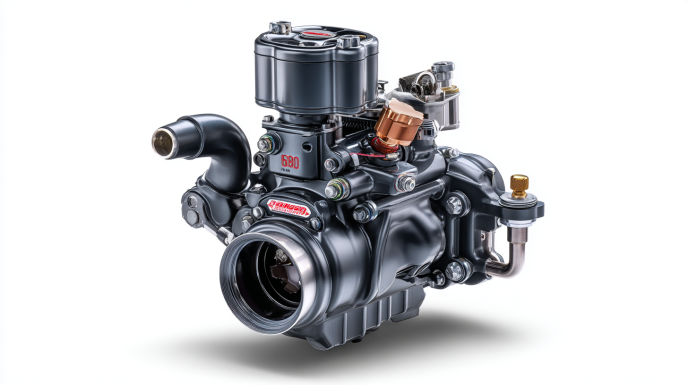
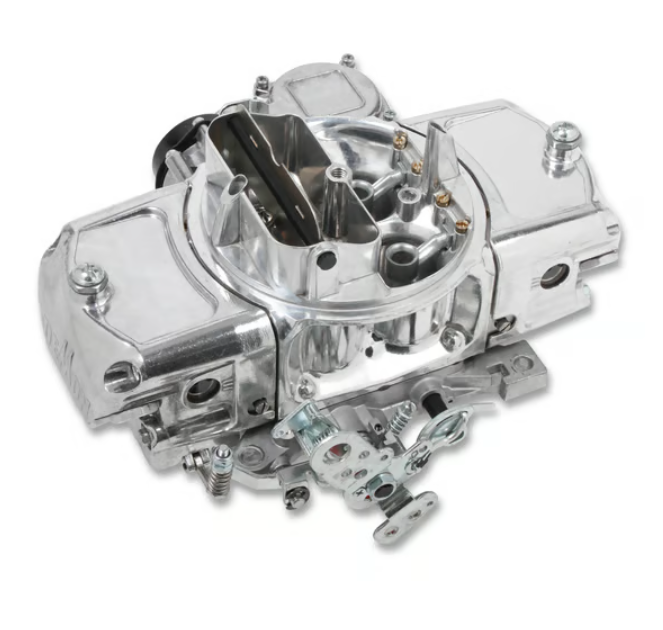
650 CFM Speed Demon Carburetor
- All aluminum polished construction with billet metering blocks and base plate (Now 40% lighter than the original Demons!)
- Fuel bowls and main body have been redesigned for a sleeker, more stylish appearance
- Completely re-engineered and re-calibrated for better drivability and full throttle performance
- Re-designed throttle lever with integrated Ford A/T, 700-R4, and Chrysler kick down options
When Power Meets Precision: A Deep Dive into the Beast That’s Changing the Game
The rumble of a perfectly tuned V8 engine at idle, the surge of power as you press the accelerator, the symphony of combustion that makes every gearhead’s heart race – these are the moments that define automotive passion. At the center of this mechanical orchestra sits one of the most critical components: the carburetor. And when it comes to delivering raw, unbridled performance, few names command as much respect and fear as the Demon Carburetor 650.
In the world of high-performance automotive components, where every cubic foot per minute matters and every air-fuel ratio can mean the difference between victory and defeat, the Demon Carburetor 650 has emerged as a formidable force. This isn’t just another carburetor sitting on the shelf at your local auto parts store – it’s a precisely engineered piece of automotive artistry that promises to transform your engine from a tame daily driver into a fire-breathing monster.
The Genesis of Power: What Exactly Is a Demon Carburetor 650?
The Demon Carburetor 650 represents the culmination of decades of carburetor technology evolution. Born from the ashes of traditional carburetor limitations, this mechanical marvel is designed to deliver consistent, reliable performance across a wide range of operating conditions. But what makes it truly special isn’t just its impressive specifications – it’s the philosophy behind its creation.
At its core, the Demon Carburetor 650 is a four-barrel carburetor engineered with a 650 CFM (Cubic Feet per Minute) flow rating. This number isn’t arbitrary – it represents the optimal balance between streetability and performance for a specific range of engine configurations. The carburetor features precision-machined aluminum construction, delivering both durability and weight savings compared to traditional cast iron units.
The design philosophy behind the Demon Carburetor 650 centers around the concept of “aggressive streetability.” Unlike purely race-oriented carburetors that sacrifice drivability for peak power, or overly conservative street carburetors that leave performance on the table, the Demon 650 strikes a perfect balance. It’s engineered to provide crisp throttle response, smooth idle characteristics, and explosive acceleration when you need it most.
The carburetor incorporates advanced metering systems that ensure optimal fuel delivery across the entire RPM range. The primary circuits are designed for excellent low-end response and fuel economy during cruising, while the secondary circuits come alive under heavy acceleration, delivering the additional airflow needed to support serious horsepower numbers.
The Battle of Titans: Demon Carburetor 650 vs. 750 – Understanding the Differences
One of the most frequently asked questions among performance enthusiasts is how the Demon Carburetor 650 compares to its bigger brother, the 750 model. The differences go far beyond simple CFM ratings and speak to fundamental design philosophies and intended applications.
The most obvious difference lies in the airflow capacity. While the Demon Carburetor 650 flows 650 CFM, the 750 model flows 750 CFM. This 100 CFM difference might seem modest on paper, but in the real world of engine performance, it represents a significant variation in character and capability.
The Demon Carburetor 650 is optimized for engines in the 350-450 cubic inch range, particularly those operating in street applications where drivability is paramount. Its smaller venturis create higher air velocity at lower RPMs, which translates to better throttle response and more aggressive acceleration from a standstill. The increased air velocity also improves fuel atomization, leading to more complete combustion and better fuel economy during normal driving conditions.
In contrast, the 750 model is designed for larger displacement engines or those operating at higher RPM ranges. Its larger venturis can flow more air at high RPM, supporting greater horsepower potential, but at the cost of some low-RPM performance. The larger carburetor may feel sluggish in stop-and-go traffic or during casual driving, as the air velocity through the venturis is insufficient to provide crisp throttle response.
The metering systems also differ between the two models. The Demon Carburetor 650 features more conservative jetting from the factory, reflecting its street-oriented nature. The accelerator pump systems are calibrated to provide smooth, progressive acceleration rather than the violent surge that might be desired in pure racing applications.
Another key difference lies in the secondary operation. The Demon Carburetor 650 typically features vacuum-operated secondaries, which open progressively based on engine demand rather than mechanical linkage. This design provides smoother power delivery and prevents the engine from going lean during rapid throttle applications – a common problem with mechanically-operated secondary carburetors on street engines.
Compatibility Chronicles: Which Vehicles Can Harness the Demon Carburetor 650?
The versatility of the Demon Carburetor 650 is one of its greatest strengths. This carburetor isn’t limited to a specific brand or model – it’s designed to work with a wide range of American V8 engines that have become the backbone of performance automotive culture.
Classic muscle cars from the 1960s and 1970s are natural candidates for the Demon Carburetor 650. Vehicles like the Chevrolet Camaro SS, Pontiac GTO, Plymouth Barracuda, and Ford Mustang Fastback all benefit tremendously from this carburetor’s capabilities. The original factory carburetors on these vehicles, while adequate for their time, pale in comparison to the precision and performance offered by modern designs like the Demon 650.
Small block Chevrolet engines, particularly the legendary 350 cubic inch variants, are perhaps the most common application for the Demon Carburetor 650. These engines, found in countless Camaros, Chevelles, Corvettes, and pickup trucks, respond exceptionally well to the improved airflow and metering characteristics. The carburetor’s design complements the small block Chevy’s power band perfectly, providing improved throttle response without sacrificing the smooth idle characteristics that make these engines so livable on the street.
Ford small block engines, including the 289, 302, and 351 Windsor variants, also pair beautifully with the Demon Carburetor 650. These engines, found in Mustangs, Broncos, and F-series trucks, benefit from the carburetor’s ability to improve both performance and fuel economy. The precise metering systems help overcome some of the lean-running tendencies that plagued many Ford engines from the emission-controlled era.
Mopar enthusiasts aren’t left out of the equation either. Small block Chrysler engines like the 318, 340, and 360 cubic inch variants respond exceptionally well to the Demon Carburetor 650. These engines, found in vehicles ranging from Plymouth Dusters to Dodge Challengers, gain significant performance improvements while maintaining street drivability.
Modern engine swaps have also embraced the Demon Carburetor 650. LS engine conversions, where modern GM engines are retrofitted with carburetors for simplicity or rules compliance, often utilize this carburetor. The precise metering systems help these high-flowing modern engines achieve optimal performance while maintaining the simplicity that makes carburetor systems attractive to many enthusiasts.
The carburetor’s universal mounting pattern means it can be adapted to virtually any intake manifold designed for four-barrel carburetors. This flexibility extends its compatibility to custom-built engines, kit cars, and even marine applications where reliable fuel delivery is critical.
Installation Mastery: Bringing the Demon Carburetor 650 to Life
Installing a Demon Carburetor 650 is both an art and a science, requiring attention to detail and understanding of fuel system fundamentals. While the process isn’t overly complex, proper installation is crucial for optimal performance and reliability.
The installation process begins with careful preparation of the intake manifold surface. The mounting area must be perfectly clean and flat to ensure proper sealing. Any irregularities or debris can cause vacuum leaks that will compromise performance and potentially damage the engine. A good quality carburetor gasket is essential – never reuse old gaskets or attempt to install without proper sealing.
Before mounting the Demon Carburetor 650, it’s important to verify that all vacuum lines and electrical connections are properly routed and secured. The carburetor requires several vacuum sources for proper operation, including manifold vacuum for the brake booster and other accessories, ported vacuum for timing advance, and vacuum for the secondary diaphragm operation. Each connection must be secure and properly sized to prevent leaks.
The throttle linkage installation requires particular attention. The Demon Carburetor 650 features precisely calibrated throttle plates and progression circuits, and any binding or improper adjustment in the linkage will compromise these systems. The throttle should open smoothly and completely, returning to idle position without sticking or binding. The kickdown linkage for automatic transmissions must also be properly adjusted to ensure correct shift points and transmission longevity.
Fuel delivery is another critical aspect of installation. The Demon Carburetor 650 requires adequate fuel pressure and volume to function properly. Most applications require between 5-7 PSI of fuel pressure at the carburetor inlet. Higher pressures can cause flooding and poor performance, while insufficient pressure will result in lean conditions and potential engine damage. A quality fuel pressure regulator is often necessary to achieve proper pressure, particularly on vehicles with electric fuel pumps.
The air cleaner installation shouldn’t be overlooked. The Demon Carburetor 650 is designed to work with proper air filtration, and restriction or turbulence in the air intake can significantly impact performance. A quality air filter element is essential, but it must be sized appropriately to avoid restriction. Cold air intake systems can provide additional performance benefits by supplying denser air to the carburetor.
Initial startup requires careful attention to prevent damage. The carburetor should be primed by working the accelerator pump several times before attempting to start the engine. This ensures adequate fuel is available for initial combustion. The choke system, if equipped, must be properly adjusted for the ambient temperature conditions.
The Hunt Begins: Where to Acquire Your Demon Carburetor 650
Finding and purchasing a Demon Carburetor 650 requires navigating a landscape of distributors, retailers, and manufacturers, each offering different levels of service and expertise. The availability and purchasing options have evolved significantly as the carburetor has gained popularity among performance enthusiasts.
Authorized dealers represent the most reliable source for genuine Demon Carburetor 650 units. These dealers typically offer the full range of Demon Fuel Systems products and can provide technical support and warranty coverage. They often stock multiple variations of the 650 model, allowing customers to choose the specific configuration that best matches their application. Many authorized dealers also offer installation services and tuning support, which can be invaluable for first-time carburetor buyers.
Online retailers have become increasingly popular sources for the Demon Carburetor 650. Major automotive e-commerce platforms often offer competitive pricing and convenient shipping options. However, buyers should exercise caution when purchasing online, as counterfeit carburetors have become a significant problem in the performance aftermarket. Genuine Demon carburetors feature specific markings and serial numbers that can help verify authenticity.
Performance shops and engine builders represent another excellent source for the Demon Carburetor 650. These businesses often have extensive experience with Demon products and can provide valuable advice on selection and tuning. They may also offer package deals that include installation, tuning, and related components like fuel lines and air cleaners. The expertise available at these shops can be worth the potentially higher cost compared to online retailers.
Auto shows and swap meets occasionally feature vendors selling Demon Carburetor 650 units. While prices at these events can be attractive, buyers should be particularly cautious about authenticity and warranty coverage. It’s also difficult to verify the condition and history of carburetors purchased at these venues.
Direct purchase from the manufacturer, when available, offers the ultimate assurance of authenticity and warranty coverage. Demon Fuel Systems occasionally offers direct sales through their website or at major automotive events. This option typically provides access to the latest models and configurations, along with direct technical support from the manufacturer.
When evaluating purchase options, several factors beyond price should be considered. Warranty coverage is crucial, as even high-quality carburetors can occasionally have defects or require adjustment. Technical support availability can be invaluable during installation and tuning. Return policies are also important, as carburetor sizing and configuration sometimes requires adjustment after initial installation.
Investment Analysis: Understanding Demon Carburetor 650 Pricing
The cost of a Demon Carburetor 650 reflects its position in the performance carburetor market – it’s neither the cheapest option available nor the most expensive, but it offers exceptional value for the performance and features provided. Understanding the pricing structure and factors that influence cost helps buyers make informed decisions and budget appropriately for their purchase.
Base pricing for a Demon Carburetor 650 typically ranges from $400 to $600, depending on the specific model and features included. This positions it competitively against similar offerings from other manufacturers while providing superior build quality and performance characteristics. The price variation within the model line reflects different feature sets and intended applications.
Entry-level Demon Carburetor 650 models focus on core performance and reliability while keeping costs manageable. These units feature all the essential performance characteristics that make the Demon name respected, but may lack some of the premium features found in higher-end variants. They represent an excellent value for budget-conscious enthusiasts who want genuine performance improvements without premium pricing.
Mid-range models typically include additional features like adjustable secondary operation, premium finishes, and enhanced metering systems. These features provide additional tuning flexibility and improved aesthetics, making them popular choices for show cars and serious street machines. The incremental cost over entry-level models is usually justified by the improved functionality and appearance.
Premium Demon Carburetor 650 variants incorporate the latest technological advances and premium materials. Features might include billet aluminum construction, race-oriented metering systems, and specialized coatings or finishes. These models command the highest prices but offer the ultimate in performance and durability for serious applications.
Pricing can vary significantly between different retailers and distribution channels. Authorized dealers may offer higher prices but provide superior technical support and warranty coverage. Online retailers often feature competitive pricing but may offer limited support. Local performance shops might charge premium prices but include valuable services like installation and tuning.
Seasonal factors can influence pricing, with peak performance season (spring and summer) typically seeing higher prices and limited availability. Off-season purchases can sometimes yield significant savings, though selection may be more limited. End-of-model-year clearances occasionally provide opportunities to purchase current-generation carburetors at reduced prices.
The total cost of ownership extends beyond the initial purchase price. Installation costs, if professional installation is required, can add $200-500 to the total investment. Tuning and optimization services may add additional costs but are often necessary to achieve optimal performance. Ancillary components like fuel lines, air cleaners, and mounting hardware should also be factored into the total cost.
Engineering Excellence: Decoding the Key Features of the Demon Carburetor 650
The Demon Carburetor 650 distinguishes itself through a combination of innovative features and time-tested carburetor technology. Each feature is designed to contribute to the overall performance, reliability, and drivability that has made this carburetor a favorite among discerning enthusiasts.
The precision-machined aluminum construction forms the foundation of the Demon Carburetor 650‘s performance. Unlike cast carburetors that can have internal irregularities affecting airflow, the machined construction ensures consistent internal dimensions and smooth airflow paths. The aluminum construction provides excellent heat dissipation, preventing fuel vaporization issues that can plague carburetors in high-temperature environments.
The metering system represents perhaps the most critical aspect of the Demon Carburetor 650‘s design. The primary metering circuits are calibrated to provide optimal fuel delivery during normal driving conditions, ensuring good fuel economy and smooth idle characteristics. The transition circuits, which bridge the gap between idle and main metering systems, are precisely calibrated to eliminate the flat spots and hesitation that plague many carburetors during light throttle operation.
The secondary metering system is designed to provide additional fuel flow when maximum performance is demanded. The Demon Carburetor 650 typically features vacuum-operated secondaries, which open progressively based on engine demand rather than throttle position. This design prevents the lean condition that can occur when mechanically-operated secondaries open too quickly for the engine to utilize the additional airflow effectively.
The accelerator pump system is calibrated to provide crisp throttle response without over-richening the mixture. The pump cam profiles are designed to deliver fuel precisely when needed during throttle transitions, eliminating the bog or hesitation that can occur with improperly calibrated systems. The pump discharge nozzles are sized and positioned to ensure optimal fuel distribution across all venturis.
The choke system, when equipped, features both manual and automatic operation options. The automatic choke provides convenience for daily driving, while the manual option allows for precise control during racing applications. The choke plate and linkage are designed to provide smooth, reliable operation across a wide range of temperature conditions.
Adjustability is another key feature of the Demon Carburetor 650. The idle mixture screws allow precise tuning of the air-fuel ratio at idle, ensuring smooth operation and optimal emissions. The idle speed screw provides adjustment of the throttle plate position at idle. Many models also feature adjustable secondary operation, allowing tuning of when and how quickly the secondary throttles open.
The float system utilizes modern materials and design to ensure consistent fuel level maintenance. The float bowl ventilation is designed to prevent fuel sloshing issues during aggressive driving while maintaining proper atmospheric pressure reference for the metering systems. The float needle and seat assembly provides reliable fuel flow control and positive shut-off to prevent flooding.
Quality control measures ensure that each Demon Carburetor 650 meets strict performance standards. Flow testing verifies that the carburetor meets its rated CFM capacity, while pressure testing ensures that all internal passages are properly sealed. Each carburetor is assembled by skilled technicians who understand the critical nature of precise calibration.
The Art of Optimization: Tuning Your Demon Carburetor 650 for Peak Performance
Tuning a Demon Carburetor 650 transforms it from a good carburetor into a perfectly matched component that extracts maximum performance from your engine. The tuning process requires patience, understanding, and systematic approach to achieve optimal results across all operating conditions.
Initial tuning begins with establishing baseline settings that provide safe operation while allowing for systematic optimization. The idle mixture screws should be set to approximately 1.5 turns out from lightly seated as a starting point. The idle speed should be set to the manufacturer’s recommended RPM for the specific engine application. These baseline settings provide a safe foundation for further tuning refinements.
Air-fuel ratio monitoring is crucial for proper tuning of the Demon Carburetor 650. Wide-band oxygen sensors provide real-time feedback on mixture conditions across the entire RPM range. Target air-fuel ratios vary depending on the operating condition – idle typically requires slightly rich mixtures (14.0:1 to 14.7:1), cruise conditions benefit from lean mixtures (15.0:1 to 16.0:1), and full-power situations demand rich mixtures (12.5:1 to 13.5:1) for maximum power and engine protection.
Idle tuning requires careful attention to both mixture and mechanical adjustments. The idle mixture screws should be adjusted to achieve the highest idle RPM, then the idle speed screw should be adjusted to return to the target idle speed. This process may need to be repeated several times to achieve optimal results. The idle should be smooth and consistent, without fluctuation or roughness that indicates mixture problems.
Part-throttle tuning focuses on the transition circuits and main metering systems. The Demon Carburetor 650‘s transition circuits should provide smooth acceleration from idle without hesitation or flat spots. If hesitation occurs during light acceleration, the transition circuits may need enrichment through careful adjustment of the mixture screws or modification of the transition slot exposure.
Main metering system tuning addresses full-throttle performance and power production. The primary jets control fuel flow during moderate acceleration and should be sized to provide optimal power without excessive richness. The secondary jets, if equipped, control fuel flow during maximum acceleration and should be sized to support maximum horsepower goals while maintaining safe air-fuel ratios.
Power valve tuning is critical for optimal performance from the Demon Carburetor 650. The power valve opens under high vacuum conditions to enrich the mixture for maximum power production. The opening point should be calibrated to occur at the appropriate manifold vacuum level for the specific engine and camshaft combination. Too early opening results in poor fuel economy, while too late opening can cause lean conditions and power loss.
Accelerator pump tuning ensures crisp throttle response during rapid acceleration. The pump cam profile determines the rate and duration of fuel delivery during throttle transitions. Aggressive profiles provide immediate response but may cause over-richening, while conservative profiles may allow hesitation during rapid throttle applications. The Demon Carburetor 650 typically includes multiple cam options to match different applications and preferences.
Secondary tuning, when applicable, focuses on the operation of the vacuum-operated secondary system. The secondary diaphragm should open progressively as engine airflow increases, providing additional fuel and air without causing lean conditions. The rate of secondary opening can often be adjusted through spring changes or adjustment mechanisms built into the carburetor.
Street Warrior or Track Demon: Applications for the Demon Carburetor 650
The versatility of the Demon Carburetor 650 makes it equally at home on city streets and racing circuits, though specific configurations and tuning approaches differ significantly between these applications. Understanding these differences helps enthusiasts choose the right setup for their intended use.
Street applications prioritize drivability, fuel economy, and reliability over absolute maximum performance. The Demon Carburetor 650 excels in these applications due to its sophisticated metering systems and vacuum-operated secondary design. Street-tuned versions typically feature conservative jetting that provides good fuel economy during cruise conditions while still delivering impressive performance when needed.
Daily driver applications benefit from the Demon Carburetor 650‘s smooth idle characteristics and excellent throttle response. The carburetor’s ability to maintain consistent performance across varying ambient conditions makes it ideal for vehicles that see regular use. The vacuum-operated secondaries prevent the abrupt power delivery that can make high-performance carburetors difficult to drive in traffic.
Street/strip applications represent a popular middle ground where the vehicle sees both street driving and occasional racing use. These applications typically feature more aggressive tuning than pure street cars but maintain enough civility for regular driving. The Demon Carburetor 650 handles this dual-duty role exceptionally well, providing strong performance at the drag strip while remaining tractable on the street.
Racing applications push the Demon Carburetor 650 to its performance limits through aggressive tuning and optimization for specific operating conditions. Race-tuned versions typically feature richer jetting, modified metering systems, and sometimes mechanically-operated secondaries for immediate response. The carburetor’s robust construction allows it to withstand the demands of competitive racing while providing consistent performance.
Drag racing applications particularly benefit from the Demon Carburetor 650‘s ability to deliver consistent air-fuel ratios during high-g acceleration. The float system and fuel delivery components are designed to maintain proper fuel levels even under extreme acceleration forces that can cause other carburetors to go lean and lose power.
Circle track racing applications value the Demon Carburetor 650‘s ability to maintain performance during sustained high-RPM operation. The carburetor’s airflow characteristics and metering systems are well-suited to the constant high-load conditions encountered in oval track racing. The robust construction provides reliability during long races where carburetor failure would be catastrophic.
Off-road applications present unique challenges that the Demon Carburetor 650 handles well. The sealed construction prevents dirt and debris from entering the fuel system, while the robust internal components withstand the vibration and shock associated with off-road driving. The carburetor’s ability to maintain fuel delivery during extreme vehicle attitudes makes it suitable for serious off-road applications.
Marine applications occasionally utilize the Demon Carburetor 650 in high-performance boat engines. The corrosion-resistant aluminum construction and reliable fuel delivery make it suitable for marine use, though specific marine-oriented modifications may be necessary to meet safety and regulatory requirements.
Airflow Mathematics: Understanding the CFM Rating of the Demon Carburetor 650
The 650 CFM rating of the Demon Carburetor 650 represents more than just a number on a specification sheet – it’s a carefully calculated flow rate that determines the carburetor’s suitability for specific engine combinations and applications. Understanding CFM ratings and their practical implications helps enthusiasts make informed decisions about carburetor selection.
CFM, or Cubic Feet per Minute, measures the volume of air that the carburetor can flow under specific test conditions. The standard test conditions typically involve a pressure drop of 1.5 inches of mercury across the carburetor venturis, simulating realistic engine operating conditions. The Demon Carburetor 650‘s rating indicates it can flow 650 cubic feet of air per minute under these standardized conditions.
The relationship between engine displacement, RPM, and required CFM follows a mathematical formula that helps determine appropriate carburetor sizing. The basic formula is: CFM = (Engine Displacement × Maximum RPM × Volumetric Efficiency) ÷ 3456. This calculation provides the theoretical airflow requirement, though practical considerations often require modifications to this baseline number.
For example, a 350 cubic inch engine operating at 6000 RPM with 85% volumetric efficiency would theoretically require: (350 × 6000 × 0.85) ÷ 3456 = 515 CFM. The Demon Carburetor 650 provides adequate headroom above this theoretical requirement, ensuring the carburetor never becomes a restriction to performance.
The Demon Carburetor 650‘s CFM rating makes it ideally suited for engines in the 300-450 cubic inch range, depending on intended RPM operation and performance goals. Smaller engines benefit from the increased air velocity through the venturis at lower RPM, while larger engines may require the full flow capacity during high-RPM operation.
Venturi size plays a crucial role in how the 650 CFM capacity is delivered across the RPM range. The Demon Carburetor 650 features carefully sized primary and secondary venturis that optimize air velocity for different operating conditions. The primary venturis are sized to provide good low-RPM performance, while the secondary venturis provide the additional flow needed for high-RPM operation.
Air velocity through the venturis affects fuel metering and throttle response. Higher air velocities improve fuel atomization and mixing, leading to better combustion efficiency and power production. The Demon Carburetor 650‘s venturi sizing maintains optimal air velocities across a wide RPM range, contributing to its excellent performance characteristics.
The flow characteristics of the Demon Carburetor 650 aren’t linear across its operating range. Flow begins with the primary venturis alone, providing excellent low-RPM performance and fuel economy. As throttle opening increases and engine demand rises, the secondary venturis begin to open, providing additional airflow capacity. This progressive flow characteristic matches well with most engine’s power delivery characteristics.
Manifold design significantly influences how effectively the Demon Carburetor 650‘s CFM rating translates to engine performance. Single-plane manifolds typically provide better high-RPM flow but may compromise low-RPM performance. Dual-plane manifolds optimize low-RPM performance but may restrict high-RPM flow. The Demon Carburetor 650‘s characteristics complement both manifold types, though specific tuning approaches may vary.
Mixture Mastery: Adjusting Air-Fuel Ratios on the Demon Carburetor 650
Precise air-fuel mixture control represents the heart of carburetor tuning, and the Demon Carburetor 650 provides multiple adjustment mechanisms to achieve optimal ratios across all operating conditions. Understanding these adjustment methods and their effects enables enthusiasts to extract maximum performance while maintaining engine longevity and reliability.
The idle mixture adjustment screws provide the most accessible tuning interface on the Demon Carburetor 650. These screws control the fuel flow through the idle circuits, which supply fuel during idle and light throttle conditions. The adjustment procedure involves turning the screws to achieve the highest idle RPM, indicating optimal mixture strength for the current conditions. Each engine requires individual adjustment, as factors like camshaft overlap, compression ratio, and exhaust system design all influence optimal idle mixture requirements.
Primary jet selection controls fuel flow during moderate throttle applications and cruising conditions. The Demon Carburetor 650 typically includes removable jets that can be changed to optimize performance for specific applications. Larger jets provide richer mixtures and more power but may compromise fuel economy. Smaller jets lean the mixture and improve economy but may cause power loss or detonation if taken too far. Jet selection requires systematic testing and air-fuel ratio monitoring to achieve optimal results.
The power valve system provides mixture enrichment during high-load conditions when maximum power is required. The Demon Carburetor 650‘s power valve opens when manifold vacuum drops below a preset level, indicating high engine load. The opening point can be adjusted by changing the power valve rating, while the amount of enrichment can be controlled through power valve channel restrictions or jet changes. Proper power valve tuning is crucial for maximum power production and engine protection.
Secondary jet tuning becomes important when the secondary throttles are operational. The Demon Carburetor 650‘s secondary jets control fuel flow when maximum airflow capacity is needed. These jets typically require richer settings than primary jets to compensate for the reduced fuel atomization that occurs at high airflow rates. Secondary jetting often requires dynamometer testing or track evaluation to optimize properly.
Accelerator pump adjustment controls fuel delivery during throttle transitions. The Demon Carburetor 650 includes adjustable pump systems that allow tuning of both the amount and timing of fuel delivery during acceleration. Insufficient pump shot causes hesitation or stumbling during acceleration, while excessive pump shot can cause over-richening and power loss. The pump cam profile determines the rate of fuel delivery, with more aggressive profiles providing immediate response at the expense of potential over-richening.
Float level adjustment affects all metering circuits by controlling the fuel level within the carburetor bowl. The Demon Carburetor 650 requires precise float level adjustment to maintain consistent fuel delivery. Low float levels can cause lean conditions and fuel starvation during acceleration, while high float levels can cause flooding and rich operation. Float level should be checked and adjusted according to manufacturer specifications whenever jetting changes are made.
Transition slot adjustment affects the overlap between idle and main metering circuits. The Demon Carburetor 650‘s transition slots should be properly exposed at idle to ensure smooth acceleration from idle conditions. Too little exposure causes hesitation during initial throttle application, while too much exposure can cause rich idle conditions and poor fuel economy. Transition slot exposure is adjusted through throttle plate positioning and idle speed adjustments.
Air bleed modifications represent an advanced tuning technique that can optimize the Demon Carburetor 650‘s performance for specific applications. Air bleeds control the emulsion characteristics of the fuel as it passes through the metering circuits. Larger air bleeds lean the mixture and improve fuel atomization, while smaller air bleeds richen the mixture and may improve low-RPM performance. Air bleed changes require careful testing and should only be attempted by experienced tuners.
Carburetor Combat: Demon Carburetor 650 vs. Holley Performance
The performance carburetor market features several respected manufacturers, but the comparison between the Demon Carburetor 650 and Holley carburetors represents one of the most significant debates among performance enthusiasts. Both manufacturers offer quality products with distinct characteristics and advantages.
Holley has dominated the performance carburetor market for decades, with their four-barrel carburetors becoming virtually synonymous with American performance. Holley’s extensive product line includes options ranging from basic replacement carburetors to highly specialized racing units. Their carburetors feature proven designs, widespread availability, and extensive aftermarket support. However, some Holley models have developed reputations for requiring frequent tuning and adjustment to maintain optimal performance.
The Demon Carburetor 650 enters this competitive landscape with several advantages over comparable Holley models. The precision machining used in Demon construction provides more consistent internal dimensions and smoother airflow paths compared to the cast construction used in many Holley carburetors. This manufacturing difference translates to more consistent performance and less variation between individual carburetors.
Metering system design represents another area where the Demon Carburetor 650 distinguishes itself from Holley competitors. Demon’s metering systems are designed with more sophisticated progression circuits and transition systems, providing smoother operation across the entire RPM range. Many Holley carburetors, particularly budget-oriented models, feature simpler metering systems that may require extensive modification to achieve optimal performance.
The secondary operation systems differ significantly between the two manufacturers. The Demon Carburetor 650 typically features vacuum-operated secondaries with carefully calibrated diaphragm systems that provide progressive operation based on engine demand. Many Holley carburetors use mechanical secondary operation that opens based on throttle position rather than engine demand, potentially causing lean conditions if not properly matched to the engine.
Build quality and attention to detail favor the Demon Carburetor 650 in most comparisons. Demon carburetors typically feature better surface finishes, more precise calibration from the factory, and higher quality internal components. These factors contribute to longer service life and more consistent performance over time. Holley quality varies significantly across their product line, with their premium models approaching Demon quality levels but at substantially higher costs.
Aftermarket support strongly favors Holley carburetors due to their long market presence and widespread use. Replacement parts, tuning components, and technical information are readily available for virtually all Holley models. The Demon Carburetor 650, being a newer design, has more limited aftermarket support, though this situation continues to improve as the carburetor gains popularity.
Tuning characteristics differ between the two brands, with the Demon Carburetor 650 generally requiring less extensive modification to achieve good performance. Holley carburetors often require significant jetting changes, power valve modifications, and other adjustments to optimize performance for specific applications. Demon carburetors typically perform well with minimal modifications, though they still benefit from proper tuning for optimal results.
Pricing comparisons favor the Demon Carburetor 650 when compared to equivalent Holley models. Demon provides performance and build quality comparable to Holley’s premium offerings at prices closer to their mid-range products. This value proposition has contributed significantly to Demon’s growing market acceptance among performance enthusiasts.
Community Verdict: Reviews and Ratings for the Demon Carburetor 650
The performance automotive community has embraced the Demon Carburetor 650 with enthusiasm, as evidenced by consistently positive reviews across multiple platforms and user demographics. These real-world experiences provide valuable insights into the carburetor’s strengths and limitations in various applications.
Professional automotive journalists have praised the Demon Carburetor 650 for its combination of performance and drivability. Multiple magazine tests have demonstrated measurable horsepower and torque improvements over stock carburetors, often accompanied by improved throttle response and fuel economy. The consistent theme in professional reviews emphasizes the carburetor’s ability to provide race-level performance without sacrificing street manners.
Drag racing enthusiasts have provided particularly positive feedback about the Demon Carburetor 650‘s consistency and reliability under racing conditions. Users report improved elapsed times and trap speeds compared to their previous carburetors, often with minimal tuning required to achieve optimal performance. The carburetor’s ability to maintain consistent air-fuel ratios during high-g acceleration has earned praise from serious racers who demand reliability under extreme conditions.
Street performance enthusiasts consistently highlight the Demon Carburetor 650‘s improved drivability compared to other high-performance carburetors. Users report smoother idle characteristics, better cold-weather operation, and improved fuel economy during normal driving. The vacuum-operated secondary system receives particular praise for providing smooth power delivery that doesn’t overwhelm traction-limited vehicles.
Online forums and social media platforms feature extensive discussions about the Demon Carburetor 650, with user experiences overwhelmingly positive. Common themes include easy installation, minimal tuning requirements, and noticeable performance improvements. Users frequently compare the Demon favorably to Holley and other competitive carburetors, particularly regarding build quality and out-of-box performance.
Engine builders and professional tuners have provided positive assessments of the Demon Carburetor 650‘s design and construction quality. Many report that Demon carburetors require less extensive modification and tuning compared to competitive products to achieve optimal performance. The precision machining and consistent calibration reduce the variability that can plague other carburetor brands.
Restoration enthusiasts appreciate the Demon Carburetor 650‘s ability to provide modern performance while maintaining a period-appropriate appearance. The carburetor’s external design doesn’t look out of place on classic muscle cars, while the internal improvements provide performance that exceeds original equipment by substantial margins. This combination appeals to owners who want improved performance without compromising authenticity.
Customer service experiences with Demon Fuel Systems receive consistently high ratings from users. The company’s technical support team is frequently praised for their knowledge and willingness to help customers achieve optimal performance. Warranty support and problem resolution are handled professionally and promptly, contributing to overall customer satisfaction.
Critical feedback about the Demon Carburetor 650 is relatively limited but focuses on several areas. Some users report difficulty obtaining replacement parts compared to more established carburetor brands. Others note that the carburetor’s premium pricing may be difficult to justify for budget-conscious enthusiasts, though most acknowledge that the performance and quality justify the cost.
Long-term reliability reports continue to accumulate as more Demon Carburetor 650 units accumulate mileage in various applications. Early indications suggest excellent durability and consistent performance over time, though comprehensive long-term data remains limited due to the carburetor’s relatively recent introduction to the market.
Maintenance Mastery: Keeping Your Demon Carburetor 650 in Peak Condition
Proper maintenance of the Demon Carburetor 650 ensures consistent performance, longevity, and reliability across thousands of miles and operating conditions. The maintenance requirements are straightforward but require attention to detail and adherence to proper procedures to achieve optimal results.
Regular cleaning represents the most important maintenance task for the Demon Carburetor 650. Modern gasoline contains additives and ethanol that can leave deposits in carburetor passages over time, particularly if the vehicle sits unused for extended periods. Complete carburetor disassembly and cleaning should be performed annually for vehicles in regular use, or more frequently for racing applications that operate under extreme conditions.
The cleaning process begins with careful disassembly of the Demon Carburetor 650, paying particular attention to the orientation and position of components during removal. All metal components should be cleaned in carburetor cleaner or ultrasonic cleaning solutions that remove fuel deposits without damaging aluminum surfaces. Non-metal components like gaskets, O-rings, and diaphragms should be replaced during cleaning rather than attempting to reuse potentially compromised sealing surfaces.
Float system maintenance requires particular attention due to its critical role in fuel metering. The Demon Carburetor 650‘s float should be inspected for damage or fuel absorption that can affect buoyancy. Float level should be verified and adjusted according to specifications during each cleaning cycle. The needle and seat assembly should be inspected for wear or damage that could cause flooding or fuel starvation.
Accelerator pump maintenance involves inspection and replacement of pump diaphragms, check valves, and discharge nozzles. The Demon Carburetor 650‘s pump system is subject to wear from fuel additives and contamination, making regular inspection and replacement necessary for optimal throttle response. Pump discharge nozzles should be clear of obstruction and properly sized for the application.
Air filter maintenance significantly impacts Demon Carburetor 650 performance and longevity. Dirty or restricted air filters force the carburetor to operate with insufficient airflow, causing rich operation and poor performance. Filter elements should be inspected regularly and replaced when dirty or damaged. High-performance applications may require more frequent filter changes due to increased airflow and contamination levels.
Fuel system maintenance extends beyond the carburetor itself but significantly impacts Demon Carburetor 650 performance. Fuel filters should be replaced regularly to prevent contamination from reaching the carburetor. Fuel lines should be inspected for deterioration, particularly with ethanol-blended fuels that can cause rubber degradation. The fuel tank should be kept clean and free of water contamination that can cause carburetor problems.
Linkage and adjustment maintenance ensures that the Demon Carburetor 650‘s mechanical systems operate smoothly and accurately. Throttle linkages should be lubricated and adjusted to prevent binding or excessive play. Choke linkages require similar attention to ensure proper operation during cold weather conditions. All adjustment screws and linkages should be checked periodically for proper setting and smooth operation.
Storage preparation becomes critical for vehicles equipped with the Demon Carburetor 650 that will sit unused for extended periods. Modern gasoline can deteriorate and leave deposits within weeks, making proper storage preparation essential. Fuel stabilizers should be added to prevent fuel degradation, and the carburetor should be drained if storage will exceed several months.
Troubleshooting common problems with the Demon Carburetor 650 requires systematic diagnosis and attention to potential causes. Poor idle quality may indicate mixture adjustment problems or vacuum leaks. Hesitation during acceleration could point to accelerator pump problems or lean main jetting. High fuel consumption might indicate rich jetting or float level problems. Each symptom requires specific diagnostic procedures to identify and correct the underlying cause.
Engine Harmony: Matching the Demon Carburetor 650 to Your Powerplant
Selecting the correct engine combination for the Demon Carburetor 650 maximizes performance potential while ensuring optimal drivability and reliability. The carburetor’s characteristics make it well-suited to specific engine configurations and operating requirements, though proper matching requires understanding of both engine and carburetor capabilities.
Small block Chevrolet engines represent the most popular application for the Demon Carburetor 650. The 350 cubic inch variants, particularly those with performance camshafts and improved cylinder heads, benefit tremendously from the carburetor’s improved airflow and metering characteristics. These engines typically produce peak power in the 5000-6000 RPM range, which matches well with the Demon 650’s flow characteristics and venturi sizing.
The Demon Carburetor 650 also pairs excellently with small block Chevrolet 327 and 307 cubic inch engines that feature performance modifications. These smaller displacement engines benefit from the carburetor’s excellent low-RPM air velocity, which improves throttle response and fuel atomization. The carburetor’s 650 CFM capacity provides adequate headroom for these engines without causing the sluggish throttle response that can occur with oversized carburetors.
Ford small block engines, including the 289, 302, and 351 Windsor variants, respond well to the Demon Carburetor 650‘s characteristics. These engines typically feature different port designs and flow characteristics compared to Chevrolet engines, but the Demon 650’s versatile metering systems adapt well to these differences. Ford engines often benefit from the carburetor’s ability to provide consistent fuel delivery across varying operating conditions.
Chrysler small block engines like the 318, 340, and 360 cubic inch variants also mate well with the Demon Carburetor 650. These engines often feature relatively conservative camshaft profiles and compression ratios, making them well-suited to the carburetor’s street-oriented characteristics. The improved fuel metering can help overcome some of the lean-running tendencies that affected many Chrysler engines from the emissions era.
Camshaft selection significantly influences how well an engine works with the Demon Carburetor 650. Mild performance camshafts with duration figures in the 220-240 degree range typically work excellently with the carburetor’s vacuum-operated secondary system. More aggressive camshafts may require modifications to the secondary operation or jetting to compensate for reduced manifold vacuum and altered airflow characteristics.
Compression ratio considerations affect jetting and tuning requirements for the Demon Carburetor 650. Higher compression engines typically require richer jetting to prevent detonation and provide optimal power production. Lower compression engines may benefit from leaner jetting to improve fuel economy and throttle response. The carburetor’s adjustable metering systems accommodate a wide range of compression ratios with appropriate tuning.
Cylinder head modifications can significantly impact the Demon Carburetor 650‘s performance potential. Improved cylinder heads with larger valves and better port designs increase airflow capacity, potentially allowing the carburetor to support higher horsepower levels. However, dramatic increases in engine airflow capacity may require carburetor upgrades or modifications to maintain optimal air-fuel ratios.
Exhaust system design influences the Demon Carburetor 650‘s performance characteristics through its effects on cylinder scavenging and manifold vacuum. Free-flowing exhaust systems typically improve engine breathing and allow the carburetor to operate more efficiently. Restrictive exhaust systems can limit engine performance regardless of carburetor capacity, making exhaust system upgrades an important consideration for maximum performance.
Intake manifold selection plays a crucial role in how effectively the Demon Carburetor 650 delivers its performance potential. Dual-plane manifolds optimize low-RPM performance and are well-suited to street applications where drivability is important. Single-plane manifolds provide better high-RPM flow but may compromise low-RPM performance, making them better suited to racing applications or engines that operate primarily at higher RPM.
Performance Gains: Fuel Efficiency and Horsepower with the Demon Carburetor 650
The Demon Carburetor 650 delivers measurable improvements in both fuel efficiency and horsepower production compared to stock carburetors and many competitive aftermarket units. These improvements stem from the carburetor’s advanced metering systems, precision construction, and optimized airflow characteristics that work together to extract maximum performance from the engine.
Horsepower gains from installing a Demon Carburetor 650 typically range from 15-30 horsepower on most small block engines, depending on the condition and specifications of the original carburetor. These gains result from improved airflow capacity, better fuel metering, and reduced restrictions in the carburetor body. The gains are particularly noticeable in the mid-range RPM where most street driving occurs, providing more usable performance for daily driving situations.
Torque improvements often exceed horsepower gains, particularly in the low-to-mid RPM range where the Demon Carburetor 650‘s venturi design provides excellent air velocity and fuel atomization. Torque gains of 20-40 foot-pounds are common, translating to improved acceleration and better overall drivability. The improved torque production makes the engine feel more responsive and powerful during normal driving conditions.
Fuel efficiency improvements may seem counterintuitive for a performance carburetor, but the Demon Carburetor 650‘s precise metering systems often provide better fuel economy than worn or poorly calibrated stock carburetors. Improvements of 10-15% in fuel economy are possible, particularly on engines with previously poor carburetion. The improved atomization and metering accuracy allow the engine to operate closer to optimal air-fuel ratios across a wider range of conditions.
Throttle response improvements are immediately noticeable after installing a Demon Carburetor 650. The carburetor’s accelerator pump system and transition circuits provide crisp, immediate response to throttle inputs without the hesitation or flat spots that plague many carburetors. This improved response makes the vehicle feel more powerful and responsive even when absolute horsepower gains are modest.
Part-throttle performance sees significant improvements with the Demon Carburetor 650 installation. The sophisticated progression circuits and metering systems provide smooth, linear power delivery during normal acceleration. This improvement in drivability makes the vehicle more pleasant to drive in traffic and during casual driving, while still providing excellent performance when needed.
High-RPM performance benefits from the Demon Carburetor 650‘s ability to maintain consistent fuel delivery as engine speed increases. Many stock carburetors experience fuel delivery problems at higher RPM due to inadequate flow capacity or poor internal design. The Demon 650’s 650 CFM capacity and optimized internal design maintain performance throughout the engine’s operating range.
Cold-weather performance improvements result from the Demon Carburetor 650‘s improved choke system and overall calibration. The carburetor typically starts and runs better in cold conditions compared to worn or poorly adjusted stock units. The improved cold-weather performance extends the driving season for many enthusiasts in northern climates.
Emission characteristics may also improve with the Demon Carburetor 650, particularly when replacing worn or poorly calibrated stock carburetors. The improved metering accuracy helps the engine operate closer to optimal air-fuel ratios, reducing unburned hydrocarbons and carbon monoxide emissions. While the carburetor is designed primarily for performance, the improved combustion efficiency often provides environmental benefits as well.
Dyno testing consistently demonstrates the performance benefits of the Demon Carburetor 650 across various engine combinations. Professional engine builders report that the carburetor typically requires minimal tuning to achieve optimal results, unlike some competitive carburetors that require extensive modification to perform well. The consistent performance across different engines and applications has made it a popular choice among professional builders.
Troubleshooting Territory: Common Issues and Solutions for the Demon Carburetor 650
Despite its excellent reputation for reliability and performance, the Demon Carburetor 650 can occasionally experience problems that affect operation and performance. Understanding common issues and their solutions enables owners to maintain optimal performance and quickly address problems when they arise.
Rich running conditions represent one of the most common issues encountered with the Demon Carburetor 650. Symptoms include black smoke from the exhaust, poor fuel economy, rough idle, and fouled spark plugs. Rich conditions can result from incorrect float level, oversized jetting, stuck power valve, or contaminated fuel. Diagnosis begins with checking float level and fuel pressure, followed by systematic evaluation of jetting and metering systems.
Lean running conditions can cause poor performance, detonation, and potential engine damage. Symptoms include poor acceleration, engine knocking, overheating, and lean surge during cruise conditions. Lean conditions may result from insufficient fuel pressure, clogged jets, incorrect float level, or vacuum leaks. Systematic diagnosis includes checking fuel pressure, verifying jet sizes, and testing for vacuum leaks throughout the intake system.
Flooding problems cause fuel overflow from the carburetor bowl, creating fire hazards and preventing proper operation. Flooding typically results from incorrect float adjustment, damaged needle and seat assembly, or excessive fuel pressure. The Demon Carburetor 650‘s float system requires precise adjustment and quality components to prevent flooding problems. Regular inspection and maintenance of float system components prevents most flooding issues.
Poor idle quality can manifest as rough idle, inconsistent idle speed, or difficulty maintaining idle. Causes include incorrect idle mixture adjustment, vacuum leaks, incorrect idle speed setting, or contaminated idle circuits. The Demon Carburetor 650‘s idle system requires careful adjustment and clean fuel passages to provide smooth idle operation. Systematic adjustment procedures usually resolve idle quality problems.
Hesitation during acceleration indicates problems with the transition circuits or accelerator pump system. The Demon Carburetor 650‘s transition circuits must be properly calibrated to provide smooth acceleration from idle. Accelerator pump problems can cause immediate hesitation upon throttle application. Diagnosis involves checking pump operation, nozzle condition, and transition circuit calibration.
Hard starting problems can result from choke system malfunctions, incorrect fuel level, or contaminated fuel circuits. The Demon Carburetor 650‘s choke system must operate properly to provide adequate mixture enrichment for starting. Cold starting problems often indicate choke adjustment issues, while hot starting problems may indicate flooding or vapor lock conditions.
High fuel consumption beyond expected levels for performance applications may indicate rich jetting, incorrect float level, or internal fuel leakage. The Demon Carburetor 650 should provide reasonable fuel economy during normal driving despite its performance orientation. Excessive consumption requires systematic evaluation of all fuel metering systems to identify the root cause.
Vacuum leaks can cause numerous performance problems including rough idle, lean operation, and poor acceleration. The Demon Carburetor 650 requires proper sealing at all gasket and connection points to maintain correct operation. Vacuum leak detection using propane or carburetor cleaner helps identify problem areas that require attention.
Secondary system problems can affect high-RPM performance and power production. The Demon Carburetor 650‘s vacuum-operated secondary system requires proper diaphragm function and calibration to operate correctly. Secondary problems often manifest as poor high-RPM performance or lack of power during full-throttle acceleration.
Contamination problems can affect any carburetor system, but modern fuels with ethanol content can be particularly problematic. The Demon Carburetor 650‘s aluminum construction resists corrosion better than some materials, but fuel contamination can still cause problems. Regular cleaning and fuel system maintenance prevent most contamination-related issues.
Off-Road Adventures: Demon Carburetor 650 in Extreme Conditions
Off-road applications present unique challenges that test the Demon Carburetor 650‘s durability and performance under extreme conditions. The carburetor’s robust construction and reliable fuel delivery systems make it well-suited to off-road use, though specific considerations and modifications may be necessary for optimal performance in these demanding environments.
Dust and debris represent primary concerns for off-road applications. The Demon Carburetor 650‘s sealed construction provides better protection than many carburetors, but proper air filtration becomes critical in dusty conditions. High-quality air filter systems with adequate capacity and regular maintenance prevent contamination from reaching the carburetor’s internal systems. Some off-road applications benefit from pre-cleaner systems that remove large particles before they reach the main air filter.
Extreme vehicle attitudes during off-road driving can affect fuel delivery and carburetor operation. The Demon Carburetor 650‘s float system and fuel delivery components are designed to maintain proper operation during moderate attitude changes, but extreme angles may cause temporary fuel starvation or flooding. Anti-slosh foam in fuel tanks and careful float system calibration help minimize these effects.
Vibration and shock loads in off-road environments can loosen connections and damage sensitive components. The Demon Carburetor 650‘s robust construction withstands these conditions better than many carburetors, but regular inspection and maintenance become more critical. Thread-locking compounds and proper torque specifications help maintain secure connections despite extreme operating conditions.
Temperature extremes encountered in off-road environments can affect carburetor operation and fuel delivery. High ambient temperatures can cause vapor lock and fuel boiling, while extreme cold can affect choke operation and fuel atomization. The Demon Carburetor 650‘s aluminum construction provides good heat dissipation, but proper fuel system design and insulation may be necessary in extreme temperature environments.
Water crossings and mud present contamination risks that can affect carburetor operation. While the Demon Carburetor 650 features sealed construction, water ingestion can still occur through the air intake during deep water crossings. Proper air intake positioning and waterproof electrical connections help prevent contamination and maintain reliable operation in wet conditions.
Altitude changes during mountain off-roading affect air density and carburetor calibration. The Demon Carburetor 650 may require jetting changes when operating at significantly different altitudes from the initial tune. Higher altitudes require leaner jetting due to reduced air density, while lower altitudes may benefit from richer jetting for optimal performance.
Fuel quality and availability can be concerns in remote off-road locations. The Demon Carburetor 650 operates well with various fuel grades, but contaminated or poor-quality fuel can cause performance problems. Fuel filtration systems and water separation become more important when fuel quality is questionable or when refueling from questionable sources.
Extended idle operation during off-road driving can cause heat buildup and affect carburetor operation. Rock crawling and technical off-road driving often involve extended periods of idle or low-speed operation that can cause fuel boiling and vapor lock. Proper cooling system maintenance and fuel system insulation help prevent these problems.
Trail modifications and adjustments may be necessary to optimize the Demon Carburetor 650 for specific off-road applications. Accelerator pump calibration may need adjustment for the different throttle application patterns common in off-road driving. Idle mixture and speed adjustments may be necessary to compensate for altitude changes during extended trail rides.
Recovery and repair considerations become important for off-road applications of the Demon Carburetor 650. Spare parts and repair tools should be included in trail repair kits, particularly items like gaskets, needle and seat assemblies, and basic adjustment tools. Knowledge of field repair procedures can prevent minor carburetor problems from ending off-road adventures prematurely.
Warranty and Protection: Understanding Demon Carburetor 650 Coverage
The warranty coverage provided with the Demon Carburetor 650 reflects the manufacturer’s confidence in build quality and performance while providing customers with protection against defects and premature failure. Understanding warranty terms and coverage helps buyers make informed decisions and properly maintain their investment in performance carburetion.
Standard warranty coverage for the Demon Carburetor 650 typically includes protection against manufacturing defects and material failures for a specified period from the date of purchase. The warranty usually covers defects in materials and workmanship that affect the carburetor’s ability to function as designed. Coverage typically extends to internal components like metering systems, float assemblies, and throttle mechanisms that are subject to normal wear but should not fail prematurely.
Warranty duration varies depending on the specific model and purchase channel, but typically ranges from one to two years from the date of purchase. Some retailers may offer extended warranty programs that provide additional coverage beyond the manufacturer’s standard warranty. Racing applications may have different warranty terms due to the extreme operating conditions encountered in competitive environments.
Excluded items from warranty coverage typically include wear items like gaskets, O-rings, and diaphragms that require periodic replacement during normal maintenance. Damage resulting from improper installation, contaminated fuel, or modification also falls outside warranty coverage. Racing applications may have limited warranty coverage due to the extreme operating conditions that exceed normal design parameters.
Warranty claim procedures require documentation of purchase date and proper installation procedures. Claims typically require return of the defective carburetor to the manufacturer or authorized service center for evaluation and repair or replacement. Proper documentation of the problem and operating conditions helps expedite warranty claim processing and resolution.
Professional installation may be recommended or required to maintain warranty coverage on the Demon Carburetor 650. Improper installation can cause damage that voids warranty coverage, making professional installation a worthwhile investment for inexperienced mechanics. Many performance shops offer installation services and can provide documentation of proper installation procedures for warranty purposes.
Maintenance requirements for warranty coverage typically include using appropriate fuels, maintaining proper fuel filtration, and performing regular cleaning and adjustment procedures. Failure to perform required maintenance may void warranty coverage, particularly if neglect contributes to carburetor failure or performance problems.
Technical support services are often included with Demon Carburetor 650 purchases, providing customers with access to expert advice on installation, tuning, and troubleshooting. This support can help prevent problems that might otherwise require warranty service while ensuring optimal performance from the carburetor investment.
Registration requirements may apply to Demon Carburetor 650 warranties, requiring customers to register their purchase with the manufacturer within a specified time period. Registration helps establish proof of purchase and ensures that customers receive important product updates and safety information.
Transferability of warranty coverage varies by manufacturer and specific warranty terms. Some warranties may transfer to subsequent owners, while others are limited to the original purchaser. Understanding transferability is important for customers who may sell their vehicle or carburetor before warranty expiration.
International warranty coverage may differ from domestic coverage due to different distribution channels and service capabilities. Customers purchasing Demon Carburetor 650 units for international use should verify warranty coverage and service availability in their location before making purchase decisions.
The Future of Power: Performance Upgrades and Modifications for the Demon Carburetor 650
The Demon Carburetor 650 serves as an excellent foundation for further performance modifications and upgrades, allowing enthusiasts to customize their carburetor for specific applications and extract maximum performance from their investment. The carburetor’s robust construction and sophisticated design accommodate various modifications while maintaining reliability and drivability.
Jetting modifications represent the most common and effective upgrades for the Demon Carburetor 650. Custom jetting allows precise tuning for specific engine combinations, altitude conditions, and performance requirements. Larger primary and secondary jets can support higher horsepower applications, while smaller jets may improve fuel economy or optimize performance for restricted racing classes.
Accelerator pump upgrades can improve throttle response and acceleration characteristics. Larger pump chambers or different cam profiles provide more aggressive fuel delivery during throttle transitions, benefiting drag racing and other applications where immediate throttle response is critical. Adjustable pump systems allow fine-tuning of pump operation for specific applications and preferences.
Air bleed modifications offer advanced tuning capabilities for experienced builders seeking to optimize fuel metering characteristics. Modified air bleeds can improve fuel atomization, alter mixture distribution between cylinders, and fine-tune the carburetor’s response to specific engine combinations. These modifications require extensive testing and expertise to achieve optimal results.
Power valve upgrades allow customization of mixture enrichment characteristics for different engine combinations and operating conditions. Different power valve opening points can optimize performance for specific camshaft profiles and compression ratios. Adjustable power valve systems provide ultimate flexibility for racing applications where conditions may vary between events.
Secondary operation modifications can alter the carburetor’s power delivery characteristics. Mechanical secondary conversion kits provide immediate secondary opening for drag racing applications, while adjustable vacuum secondary systems allow tuning of secondary opening rates for different applications. Progressive linkage systems can provide customized secondary operation curves.
Fuel delivery upgrades may be necessary for high-horsepower applications that exceed the Demon Carburetor 650‘s standard capacity. Larger fuel inlets, improved needle and seat assemblies, and high-flow fuel bowls can support extreme horsepower levels while maintaining reliable fuel delivery. These modifications often require professional installation and tuning.
Throttle body modifications can improve airflow capacity and reduce restriction for maximum performance applications. Throttle body enlargement, blade modifications, and improved shaft systems can extract additional performance from the Demon Carburetor 650 platform. These modifications require precision machining and careful attention to maintain proper throttle operation.
Electronic control upgrades represent emerging technology for carburetor applications. Electronic choke systems provide precise mixture control during warm-up, while electronic fuel injection supplements can provide additional fuel delivery for extreme applications. These systems combine carburetor simplicity with electronic precision for ultimate performance.
Racing-specific modifications adapt the Demon Carburetor 650 for competitive applications with specialized requirements. Fuel shutoff systems for safety, adjustable float systems for varying g-forces, and specialized metering systems for specific racing fuels all enhance the carburetor’s suitability for professional racing applications.
Custom calibration services allow professional tuners to optimize Demon Carburetor 650 performance for specific applications and requirements. These services typically include flow testing, custom jetting, and dyno tuning to extract maximum performance while maintaining reliability. Professional calibration ensures that modifications work together harmoniously rather than working against each other.
The Demon Carburetor 650 has established itself as a formidable force in the performance carburetor market, delivering the perfect balance of street drivability and race-worthy performance that enthusiasts demand. From its precision-machined construction to its sophisticated metering systems, every aspect of this carburetor reflects a commitment to excellence that translates into real-world performance gains.
Whether you’re building a weekend warrior for the drag strip, restoring a classic muscle car to its former glory, or simply seeking better performance from your daily driver, the Demon Carburetor 650 offers the combination of power, reliability, and drivability that makes every mile more enjoyable. Its 650 CFM capacity strikes the perfect balance for most small-block engines, while its advanced design features ensure consistent performance across all operating conditions.
The carburetor’s versatility extends beyond simple bolt-on performance improvements. Its upgrade potential and modification flexibility mean that it can grow with your performance needs, serving as a foundation for increasingly sophisticated builds. From basic street applications to professional racing environments, the Demon Carburetor 650 delivers the performance and reliability that serious enthusiasts demand.
In a world where fuel injection dominates new vehicle production, the Demon Carburetor 650 proves that carburetor technology continues to evolve and improve. It represents the best of both worlds – the simplicity and tunability that makes carburetors beloved by enthusiasts, combined with the precision and performance that modern engines demand.
The future of performance lies not in choosing between old and new technology, but in selecting the best technology for each specific application. For countless enthusiasts seeking the perfect balance of performance, reliability, and character, the Demon Carburetor 650 continues to prove that sometimes, the old ways are still the best ways – especially when executed with modern precision and engineering excellence.