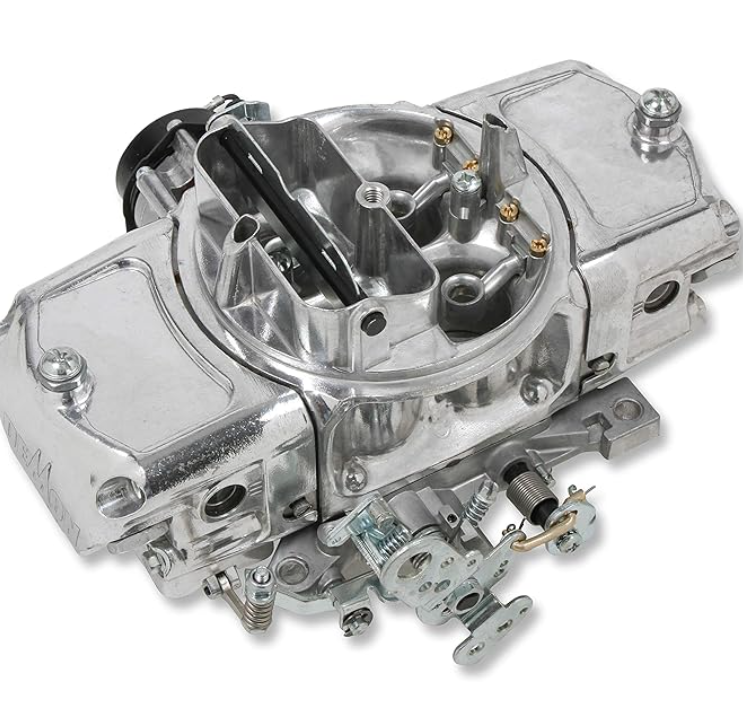
Demon SPD-750-MS Mighty Carburetor, 1 Pack
- All aluminum polished construction with billet metering blocks and base plate
- Fuel bowls and main body have been redesigned for a sleeker, more stylish appearance
- Completely re-engineered and re-calibrated for better drivability and full throttle performance
When Performance Meets Precision – A Complete Guide to the Carburetor That’s Changing the Game
The rumble of a perfectly tuned engine is music to any gearhead’s ears, and at the heart of that symphony lies a critical component that can make or break your performance dreams. Enter the Demon Carburetor 750, a piece of automotive artistry that’s been turning heads and burning rubber since its introduction to the performance aftermarket scene.
In an era where fuel injection dominates the automotive landscape, there’s something beautifully rebellious about the carburetor enthusiast. These mechanical marvels represent a time when tuning was an art form, when the relationship between man and machine was tangible, and when every twist of a screw could mean the difference between victory and defeat on the track.
What is a Demon Carburetor 750?
The Demon Carburetor 750 stands as a testament to precision engineering and performance-oriented design. This four-barrel carburetor, with its 750 CFM (Cubic Feet per Minute) rating, represents the sweet spot for many performance applications. Unlike mass-produced carburetors that often compromise between cost and capability, the Demon 750 was born from a philosophy that performance should never be sacrificed.
At its core, the Demon Carburetor 750 is a downdraft, four-barrel carburetor designed specifically for high-performance applications. The “750” designation refers to its airflow capacity of 750 cubic feet per minute, making it ideal for engines producing between 450 to 550 horsepower, though this can vary depending on the specific application and tuning requirements.
What sets the Demon apart from its competitors isn’t just its raw specifications, but the attention to detail that goes into every component. From the precisely machined throttle shafts to the carefully calibrated metering blocks, every element of the Demon Carburetor 750 serves a specific purpose in the pursuit of optimal performance.
The carburetor features a traditional square-bore design with 1 11/16-inch primary and 1 11/16-inch secondary throttle bores, providing excellent throttle response and progressive power delivery. The aluminum construction not only reduces weight compared to traditional cast iron units but also provides superior heat dissipation, crucial for maintaining consistent performance during extended high-performance driving sessions.
The Mechanical Symphony: How Does the Demon Carburetor 750 Work?
Understanding how the Demon Carburetor 750 operates requires appreciating the elegant simplicity of carburetor technology combined with sophisticated engineering refinements. At its fundamental level, a carburetor is a mixing device that combines fuel and air in the proper proportions for combustion, but the Demon takes this basic concept to extraordinary levels of precision.
The heart of the Demon Carburetor 750 lies in its venturi system. As air rushes through the carburetor barrel, it passes through carefully designed venturis that create areas of low pressure. This pressure differential draws fuel from the float bowl through precisely sized jets, creating the fuel-air mixture that feeds your engine’s hunger for power.
The primary circuit handles idle and low-speed operation through a series of idle air bleeds and transfer slots. As you press the accelerator, the throttle plates open progressively, first engaging the primary barrels for smooth, responsive acceleration. The secondary circuit kicks in as demand increases, providing the additional airflow needed for high-performance operation.
What makes the Demon Carburetor 750 special is its sophisticated metering system. The main jets, power valve, and air bleeds work in concert to maintain the optimal air-fuel ratio across the entire RPM range. The accelerator pump system provides that crucial shot of fuel during rapid throttle opening, eliminating the dreaded bog that can plague poorly tuned carburetors.
The choke system, whether manual or electric, ensures reliable cold-start operation by enriching the mixture when the engine is cold. As the engine warms up, the choke gradually opens, allowing the carburetor to transition to its normal operating mixture.
Compatibility: Finding Your Perfect Match
The versatility of the Demon Carburetor 750 extends across a wide range of applications, making it a popular choice among enthusiasts building everything from street machines to all-out race cars. Understanding which vehicles and engines work best with this carburetor is crucial for achieving optimal performance.
Small block Chevy engines, particularly those in the 350 to 400 cubic inch range, represent perhaps the most common application for the Demon Carburetor 750. These engines, whether stock or modified, benefit tremendously from the improved airflow and precise fuel metering that the Demon provides. The 750 CFM rating is particularly well-suited to moderately built small blocks with performance camshafts, headers, and intake manifolds.
Big block applications also work exceptionally well with the Demon Carburetor 750, particularly for street-driven vehicles where the slightly smaller CFM rating provides better low-end throttle response compared to larger carburetors. A well-built 454 Chevy or 440 Mopar can benefit significantly from the Demon’s precise fuel curve and responsive throttle characteristics.
Ford enthusiasts haven’t been left out of the equation. The Demon Carburetor 750 works beautifully on 302, 351, and even 390 Ford engines. The carburetor’s design characteristics complement the Ford’s airflow patterns, providing smooth power delivery and excellent drivability.
For those building high-performance street machines, the Demon Carburetor 750 offers the perfect balance between performance and streetability. It provides enough airflow for serious power while maintaining the precise fuel metering necessary for good fuel economy and emissions compliance in areas where such considerations matter.
Race applications represent another strong suit for the Demon Carburetor 750. While larger carburetors might seem like the obvious choice for racing, the 750’s precise metering and excellent throttle response often translate to better elapsed times and consistent performance. Many successful bracket racers swear by the Demon 750 for its predictable behavior and tune-ability.
Installation: The Art of Mounting Excellence
Installing a Demon Carburetor 750 is both a mechanical procedure and an art form. While the physical installation follows standard practices, achieving optimal performance requires attention to detail and understanding of the carburetor’s requirements.
The foundation of any successful Demon Carburetor 750 installation begins with the intake manifold. The manifold must be properly matched to both the engine and the carburetor’s requirements. A good dual-plane intake manifold works exceptionally well with the Demon 750 for street applications, providing excellent low-end torque and smooth power delivery. Single-plane manifolds can be used for racing applications where maximum high-RPM power is the priority.
Before mounting the carburetor, ensure the intake manifold surface is perfectly flat and free from warpage. Even small imperfections can create vacuum leaks that will compromise performance and make tuning nearly impossible. A good quality carburetor gasket is essential, and many enthusiasts prefer to use a thin layer of gasket sealer to ensure a perfect seal.
The Demon Carburetor 750 should be mounted with the proper hardware, ensuring even torque distribution across all mounting points. The carburetor should sit level, both front to back and side to side, to ensure proper float operation and fuel distribution. A slight rear-facing angle can be acceptable in some racing applications, but street cars should maintain a level installation.
Fuel supply represents a critical aspect of the installation process. The Demon Carburetor 750 requires a steady supply of clean fuel at the proper pressure. Most applications work best with fuel pressure between 4.5 and 6.5 PSI. Higher pressures can cause flooding and poor performance, while insufficient pressure can cause lean conditions that damage the engine.
The fuel line should be properly sized for the application, typically 3/8-inch for most street applications and 1/2-inch or larger for racing use. A high-quality fuel filter is essential, and many installers prefer to use a clear filter that allows visual monitoring of fuel quality and flow.
Linkage setup requires careful attention to ensure proper throttle operation. The throttle linkage should operate smoothly without binding, and the throttle plates should open fully when the accelerator is pressed to the floor. Progressive linkage systems work well with the Demon Carburetor 750, providing smooth throttle response and precise control.
Sourcing Your Demon: Where to Buy
Finding a Demon Carburetor 750 requires navigating the performance parts marketplace with knowledge and discernment. The carburetor’s popularity means it’s available through multiple channels, each with distinct advantages and considerations.
Authorized Demon dealers represent the most straightforward path to purchasing a Demon Carburetor 750. These dealers typically offer the full range of Demon products, along with technical support and warranty coverage. Many performance shops that specialize in carburetors carry Demon products and can provide valuable installation and tuning advice.
Online retailers have become increasingly popular for carburetor purchases, often offering competitive pricing and convenient ordering. When purchasing a Demon Carburetor 750 online, it’s crucial to verify that you’re dealing with an authorized dealer to ensure warranty coverage and authentic products. Reading customer reviews and checking the seller’s reputation can help avoid potential issues.
Performance automotive swap meets and shows sometimes offer opportunities to find Demon Carburetor 750 units at attractive prices. However, used carburetors require careful inspection to ensure they haven’t been damaged or improperly modified. A thorough examination of the throttle shafts, float bowl condition, and overall appearance can help identify potential problems.
When considering a used Demon Carburetor 750, factor in the potential cost of rebuilding or refurbishing the unit. While the initial purchase price might seem attractive, the total investment including rebuild costs should be compared to the price of a new unit.
Investment in Performance: Understanding the Cost
The financial investment in a Demon Carburetor 750 reflects its position as a premium performance component. Understanding the pricing structure and factors that influence cost helps make an informed purchasing decision.
New Demon Carburetor 750 units typically range from approximately $400 to $600, depending on the specific model and features included. Base models offer excellent performance at the lower end of this range, while units with premium features such as annular discharge boosters or specialized racing configurations command higher prices.
The cost of a Demon Carburetor 750 should be evaluated in the context of the overall engine build and performance goals. While the initial investment might seem substantial, the carburetor’s impact on engine performance, drivability, and reliability often justifies the expense. A properly tuned Demon 750 can transform an engine’s character, providing smooth idle quality, crisp throttle response, and consistent power delivery.
Installation costs vary significantly depending on whether you perform the work yourself or hire a professional. Professional installation by an experienced carburetor specialist might add $200 to $500 to the total cost, but this investment often pays dividends in proper setup and initial tuning. The complexity of the installation and any required supporting modifications will influence the final labor cost.
Supporting components and accessories can add to the overall investment. A high-quality fuel pump, fuel lines, filters, and linkage components are often necessary to maximize the Demon Carburetor 750‘s performance potential. These ancillary costs should be factored into the total budget for the conversion.
Long-term cost considerations include maintenance and potential rebuilding requirements. The Demon Carburetor 750 is designed for durability, but like all mechanical components, it will eventually require service. Rebuild kits typically cost between $75 and $150, and professional rebuilding services might charge $200 to $400 depending on the extent of work required.
Features That Define Excellence
The Demon Carburetor 750 distinguishes itself through a comprehensive array of features designed to optimize performance across diverse applications. These features represent years of development and refinement, incorporating lessons learned from both street and racing environments.
The precision-machined throttle shafts eliminate the play and wear issues that plague many competitive carburetors. These shafts are manufactured to extremely tight tolerances, ensuring smooth operation and precise throttle control throughout the carburetor’s service life. The improved shaft sealing reduces vacuum leaks that can affect idle quality and overall performance.
Annular discharge boosters represent one of the most significant technological advances incorporated into many Demon Carburetor 750 models. These boosters improve fuel atomization by creating a more uniform fuel discharge pattern around the circumference of the venturi. The result is improved fuel distribution, better throttle response, and more complete combustion.
The float bowl design incorporates several features that enhance performance and reliability. Sight plugs allow visual monitoring of fuel level without removing the air cleaner or carburetor top. The improved bowl ventilation system maintains consistent atmospheric pressure in the float bowl, ensuring stable fuel metering regardless of operating conditions.
Adjustable air bleeds provide tuning flexibility that allows the Demon Carburetor 750 to be optimized for specific applications. These adjustments can fine-tune the air-fuel ratio at various engine speeds and loads, providing the precision necessary for maximum performance. The ability to adjust these bleeds without disassembling the carburetor simplifies the tuning process significantly.
The accelerator pump system features improved discharge nozzles and adjustable pump cams that allow customization of the acceleration enrichment curve. This system can be tuned to provide exactly the right amount of fuel during acceleration, eliminating bog or stumble while avoiding the rich conditions that waste fuel and reduce power.
Premium Demon Carburetor 750 models often include additional features such as adjustable secondary opening rates, which allow fine-tuning of the power delivery characteristics. Racing versions might incorporate alcohol-compatible components for methanol fuel applications or specialized inlet configurations for specific racing classes.
Tuning: The Path to Perfection
Proper tuning transforms the Demon Carburetor 750 from a collection of precisely machined components into a perfectly synchronized fuel delivery system. The tuning process requires patience, understanding, and systematic approach to achieve optimal results.
Initial setup begins with establishing the proper float level, which controls the amount of fuel maintained in the float bowl. The Demon Carburetor 750 typically requires a float level set between 7/16 and 1/2 inch from the top of the float bowl. This measurement should be taken with the carburetor level and the float arm resting on the closed needle valve.
Idle mixture adjustment represents the next critical step in the tuning process. The Demon Carburetor 750 features adjustable idle mixture screws that control the air-fuel ratio at idle speeds. Start with the screws approximately 1.5 turns out from lightly seated, then adjust for the highest idle speed. Once the highest speed is achieved, reduce the idle speed to the desired RPM using the throttle stop screw.
The power valve selection significantly influences the carburetor’s performance characteristics. The Demon Carburetor 750 power valve should open at approximately half the idle vacuum reading. For example, if the engine idles with 18 inches of vacuum, a 9.5 power valve would be appropriate. This ensures the power valve remains closed during part-throttle operation while providing enrichment when needed under load.
Main jet sizing requires careful consideration of the engine’s airflow characteristics and performance goals. The Demon Carburetor 750 typically comes with jets that provide a good starting point for most applications, but fine-tuning often requires jet changes. Larger jets provide more fuel for increased power, while smaller jets lean the mixture for better fuel economy. Changes should be made in small increments, typically two jet sizes at a time.
Secondary tuning involves adjusting the mechanical or vacuum secondary system to optimize power delivery. Mechanical secondaries should be set to open progressively as the primaries approach full opening. Vacuum secondaries should be adjusted so they open smoothly without causing a lean condition or flat spot in the power delivery.
The accelerator pump system tuning ensures crisp throttle response without flooding. The Demon Carburetor 750 pump system can be adjusted by changing the pump cam profile or adjusting the pump stroke. The goal is to provide enough fuel to prevent lean stumble during acceleration while avoiding overly rich conditions that cause black smoke or poor fuel economy.
Advanced tuning techniques might involve adjusting the air bleeds to fine-tune the air-fuel ratio at specific RPM ranges. These adjustments require experience and careful monitoring of engine performance, but they can provide the final precision needed for optimal performance.
Racing Applications: Built for Competition
The Demon Carburetor 750 has earned its reputation in competitive racing environments where performance, reliability, and consistency determine success. Understanding how this carburetor performs in racing applications reveals the depth of engineering that goes into its design.
Bracket racing represents one of the strongest applications for the Demon Carburetor 750. In bracket racing, consistency is more important than ultimate power, and the Demon’s precise metering characteristics provide the predictable performance necessary for competitive success. The carburetor’s excellent throttle response allows drivers to make precise adjustments to their driving technique, while the stable fuel delivery ensures consistent elapsed times run after run.
The Demon Carburetor 750 excels in street/strip applications where the vehicle must perform well both on the street and at the track. The 750 CFM rating provides sufficient airflow for serious performance while maintaining the driveability characteristics necessary for street use. Many successful street/strip cars rely on the Demon 750 to provide the versatility needed for this demanding dual-purpose role.
Oval track racing presents unique challenges that the Demon Carburetor 750 handles exceptionally well. The carburetor’s ability to maintain consistent fuel delivery during extended high-RPM operation makes it suitable for these applications. The improved bowl ventilation system prevents fuel starvation during long turns, while the precise metering maintains optimal power output throughout the race.
Road racing applications benefit from the Demon Carburetor 750‘s excellent throttle response and stable fuel delivery during varied throttle positions. The carburetor’s ability to transition smoothly from idle to full throttle and back provides the control necessary for road racing success. The improved acceleration pump system eliminates the stumble that can cost crucial time during corner exit acceleration.
Drag racing represents perhaps the most demanding application for any carburetor, and the Demon Carburetor 750 rises to this challenge admirably. While larger carburetors might seem like the obvious choice for maximum power, the 750’s precise metering often results in better sixty-foot times and more consistent performance. The improved atomization characteristics help the engine make more power from the available fuel, while the responsive throttle characteristics provide excellent driver control.
Marine applications present unique challenges due to the constant motion and varying attitudes of boats on water. The Demon Carburetor 750‘s improved float system and bowl design help maintain consistent fuel delivery even in choppy conditions. The carburetor’s durability and corrosion resistance make it suitable for the harsh marine environment.
Demon vs. Holley: The Great Carburetor Debate
The comparison between Demon Carburetor 750 units and their Holley counterparts represents one of the most discussed topics in performance carburetor circles. Both manufacturers produce excellent products, but understanding their differences helps make the best choice for specific applications.
Build quality represents one of the most significant differences between the Demon Carburetor 750 and comparable Holley units. Demon carburetors typically feature tighter manufacturing tolerances, resulting in more precise throttle shaft fit and better overall consistency. The improved machining quality translates to better performance and longer service life.
The throttle shaft design differs significantly between the two manufacturers. Demon Carburetor 750 units feature improved shaft sealing that reduces vacuum leaks and maintains consistent performance as the carburetor ages. Holley carburetors, while reliable, may develop shaft wear issues more quickly, particularly in high-mileage applications.
Fuel metering characteristics provide another area of differentiation. The Demon Carburetor 750 typically provides more precise fuel delivery across the entire RPM range, resulting in better throttle response and more consistent air-fuel ratios. This precision can translate to improved performance and better fuel economy in many applications.
The accelerator pump system design varies between the manufacturers, with Demon typically providing more adjustability and better pump cam profiles. The Demon Carburetor 750 pump system can be fine-tuned more precisely, allowing optimization for specific applications and driving styles.
Float system design represents another area where the Demon Carburetor 750 often shows advantages. The improved float bowl ventilation and more precise float level adjustment provide more consistent fuel delivery, particularly in demanding applications such as racing or off-road use.
Cost considerations often favor Holley carburetors, which typically sell for less than comparable Demon Carburetor 750 units. However, the improved build quality and performance characteristics of the Demon often justify the additional investment for serious performance applications.
Parts availability historically favored Holley due to their longer market presence and wider distribution network. However, Demon parts availability has improved significantly, and most common service parts are readily available through performance distributors.
Tuning characteristics differ between the manufacturers, with the Demon Carburetor 750 typically requiring less adjustment to achieve optimal performance. The improved baseline calibration means many installations perform well with minimal tuning, while Holley carburetors might require more extensive modification for optimal results.
Reviews and Real-World Performance
The automotive performance community has embraced the Demon Carburetor 750 enthusiastically, with countless success stories and positive reviews from both professional builders and weekend enthusiasts. These real-world experiences provide valuable insight into the carburetor’s performance characteristics and reliability.
Professional engine builders consistently praise the Demon Carburetor 750 for its out-of-the-box performance and consistent quality. Many report that the carburetor requires minimal tuning to achieve excellent results, saving both time and customer frustration. The improved build quality means fewer warranty issues and customer complaints compared to some competitive products.
Drag racing enthusiasts frequently report improved elapsed times after switching to a Demon Carburetor 750. The consistent fuel delivery and precise metering often result in better sixty-foot times and more repeatable performance. Many bracket racers credit the Demon 750 with helping them achieve more consistent dial-ins and improved racing success.
Street car enthusiasts appreciate the Demon Carburetor 750‘s combination of performance and drivability. Many report improved throttle response, smoother idle quality, and better fuel economy compared to their previous carburetors. The carburetor’s ability to perform well in varying weather conditions and driving situations makes it particularly suitable for daily-driven performance cars.
Off-road applications have proven the Demon Carburetor 750‘s durability and reliability under extreme conditions. Users report consistent performance even when subjected to severe vibration, dust, and temperature extremes. The improved float system maintains proper fuel delivery even during aggressive off-road driving.
Marine applications demonstrate the Demon Carburetor 750‘s versatility and corrosion resistance. Boat owners report reliable performance and good fuel economy, even in saltwater environments that can be particularly harsh on carburetor components.
Long-term reliability reports show the Demon Carburetor 750 maintaining its performance characteristics well beyond what might be expected from competitive products. Users frequently report thousands of miles of trouble-free operation with minimal maintenance requirements.
The few negative reviews typically center on cost considerations rather than performance issues. Some users feel the additional cost compared to entry-level alternatives isn’t justified for their applications, though most acknowledge the superior build quality and performance.
Mastering the Air-Fuel Mixture
Achieving the perfect air-fuel mixture with a Demon Carburetor 750 requires understanding both the carburetor’s design characteristics and the specific requirements of the engine application. The mixture adjustment process involves multiple systems working in harmony to provide optimal performance across all operating conditions.
The idle mixture adjustment forms the foundation of proper Demon Carburetor 750 tuning. These adjustments control the air-fuel ratio at idle and low-speed operation, directly affecting idle quality, throttle response, and emissions. Start with the mixture screws approximately 1.5 turns out from lightly seated, then adjust each screw incrementally to achieve the highest idle speed. Once the highest speed is achieved, use the throttle stop screw to reduce idle speed to the desired RPM.
Part-throttle mixture control involves the complex interaction between the main metering system and the power valve circuit. The Demon Carburetor 750 uses precisely sized restrictors and air bleeds to maintain the correct mixture during cruise conditions. If the mixture is too lean during part-throttle operation, consider a larger power valve or smaller main air bleeds. Rich conditions might require the opposite adjustments.
Wide-open-throttle mixture tuning focuses primarily on main jet sizing and power valve selection. The Demon Carburetor 750 should provide maximum power without exceeding safe air-fuel ratios that could cause engine damage. Most engines perform best with air-fuel ratios between 12.5:1 and 13.5:1 at wide-open throttle, though specific requirements vary depending on compression ratio, camshaft specifications, and fuel quality.
The transition from idle to main metering system represents a critical area that affects throttle response and drivability. The Demon Carburetor 750 uses transfer slots and transition wells to bridge this gap smoothly. If the engine stumbles during light acceleration, the transition system may need attention. Adjusting the idle mixture screws affects the transition system, so these adjustments should be made carefully.
Secondary circuit tuning becomes important once the engine demands exceed what the primary circuit can provide. The Demon Carburetor 750 secondary circuit should complement the primary system without creating rich or lean conditions during the transition. Secondary main jets typically need to be larger than primary jets to account for the different airflow characteristics of the secondary circuit.
Altitude and weather compensation may require mixture adjustments to maintain optimal performance. Higher altitudes require richer jetting due to reduced air density, while colder weather may need slightly richer settings for best performance. The Demon Carburetor 750‘s adjustability allows fine-tuning for these varying conditions.
Understanding CFM Ratings and Engine Matching
The 750 CFM rating of the Demon Carburetor 750 represents its maximum airflow capacity under standardized test conditions, but understanding how this rating translates to real-world applications requires deeper knowledge of engine airflow requirements and carburetor sizing principles.
Engine displacement provides the starting point for carburetor sizing calculations. A basic rule of thumb suggests that naturally aspirated engines require approximately 1.5 CFM per cubic inch of displacement for maximum power applications. However, this calculation assumes high-RPM operation and aggressive camshaft profiles that may not represent typical street applications.
The Demon Carburetor 750 works exceptionally well with engines in the 400 to 500 cubic inch range, particularly those with moderate performance modifications. Smaller engines may not fully utilize the carburetor’s flow capacity, while larger engines might benefit from additional airflow under certain conditions.
RPM range significantly influences carburetor sizing requirements. Engines that operate primarily in the lower RPM ranges may perform better with smaller carburetors that provide better velocity and throttle response. The Demon Carburetor 750 strikes an excellent balance for engines that see varied RPM ranges, providing good low-end response while supporting higher RPM operation.
Camshaft specifications dramatically affect carburetor sizing requirements. Aggressive racing camshafts with significant overlap and duration create different airflow patterns than mild street camshafts. The Demon Carburetor 750 adapts well to moderate performance camshafts while still supporting more aggressive grinds when properly tuned.
Intake manifold design influences how effectively an engine can utilize the Demon Carburetor 750‘s airflow capacity. Dual-plane manifolds typically work well with the 750 CFM rating for street applications, while single-plane manifolds may benefit from the additional airflow in racing applications.
Forced induction applications require different sizing considerations entirely. Supercharged or turbocharged engines may need larger carburetors to support the increased airflow demands, though the Demon Carburetor 750 can work well in mild boost applications with appropriate tuning modifications.
Maintenance: Keeping Your Demon Running Clean
Proper maintenance ensures the Demon Carburetor 750 continues to deliver peak performance throughout its service life. A systematic approach to cleaning and servicing prevents problems before they affect performance and extends the carburetor’s operational lifespan.
Regular external cleaning maintains both appearance and performance by preventing dirt and debris from entering the carburetor’s internal passages. The Demon Carburetor 750 should be wiped down regularly with appropriate cleaners that won’t damage the aluminum finish or gasket materials. Pay particular attention to the air cleaner mounting surface and throttle linkage areas where debris commonly accumulates.
Fuel system cleanliness directly affects Demon Carburetor 750 performance and longevity. Modern gasoline formulations can create deposits and varnish that clog small passages and affect fuel flow. Using high-quality fuel and adding appropriate fuel stabilizers during storage periods helps prevent these issues. Fuel filters should be replaced regularly to prevent contamination from reaching the carburetor.
Periodic internal cleaning becomes necessary as the carburetor accumulates operating hours. The Demon Carburetor 750 can be disassembled for thorough cleaning using appropriate carburetor cleaners and techniques. Pay special attention to the small passages, jets, and air bleeds that can become restricted with deposits. Compressed air should be used carefully to avoid damaging delicate components.
Float level verification should be performed periodically to ensure consistent fuel delivery. The Demon Carburetor 750 float level can change due to fuel degradation effects on the float material or wear in the needle and seat assembly. Proper float level maintains optimal fuel delivery and prevents flooding or lean conditions.
Gasket and seal inspection prevents vacuum leaks that can significantly affect performance and drivability. The Demon Carburetor 750 uses various gaskets and seals that can deteriorate over time. Regular inspection and replacement of worn seals maintains proper carburetor operation and prevents performance degradation.
Linkage lubrication and adjustment ensures smooth throttle operation and prevents premature wear. The Demon Carburetor 750 throttle shafts and linkage points should be lubricated periodically with appropriate lubricants that won’t attract dirt or cause swelling of rubber components.
Storage preparation becomes important for seasonal vehicles or equipment. The Demon Carburetor 750 should be prepared for storage by draining fuel, adding appropriate preservatives, and protecting exposed metal surfaces from corrosion. Proper storage preparation prevents many common problems associated with fuel degradation and moisture absorption.
Engine Compatibility: Finding the Perfect Match
Selecting the right engine application for a Demon Carburetor 750 involves considering multiple factors that influence performance, drivability, and overall satisfaction with the installation. Understanding these compatibility factors helps ensure optimal results from the carburetor investment.
Compression ratio significantly influences how well an engine works with a Demon Carburetor 750. Higher compression engines typically benefit more from the carburetor’s precise metering and improved airflow characteristics. The improved fuel atomization helps prevent detonation while maximizing power output from high-compression combinations.
Camshaft selection dramatically affects carburetor performance and compatibility. The Demon Carburetor 750 works exceptionally well with performance camshafts that have moderate duration and lift specifications. Extremely aggressive racing camshafts may require larger carburetors, while very mild camshafts might not fully utilize the 750’s flow capacity.
Cylinder head flow characteristics influence how effectively an engine can utilize the Demon Carburetor 750‘s airflow capacity. Well-prepared cylinder heads with good flow numbers complement the carburetor’s capabilities, while restricted heads may limit the benefits of the improved airflow. The carburetor works best when matched to engines with good overall airflow capability.
Exhaust system design affects engine breathing and influences carburetor sizing requirements. Free-flowing exhaust systems work synergistically with the Demon Carburetor 750 to maximize engine output, while restrictive exhaust systems may limit the benefits of improved carburetor flow. Headers and high-flow exhaust systems complement the Demon’s capabilities particularly well.
Intended use patterns significantly influence engine and carburetor compatibility. Street-driven vehicles benefit from the Demon Carburetor 750‘s excellent drivability characteristics, while racing applications can take advantage of the precise metering and consistent performance. The carburetor’s versatility allows it to excel in both applications when properly configured.
Fuel quality and availability considerations affect long-term compatibility and performance. The Demon Carburetor 750 works well with pump gasoline but can be configured for racing fuels when necessary. Understanding local fuel quality and octane availability helps optimize the engine and carburetor combination for best results.
Horsepower Gains: Quantifying Performance Improvements
The performance improvements provided by a Demon Carburetor 750 can be substantial, though the exact gains depend heavily on the baseline carburetor being replaced and the specific engine application. Understanding realistic expectations helps evaluate whether the investment will provide the desired performance improvement.
Replacing a worn or poorly functioning carburetor often provides the most dramatic improvements. Engines equipped with old, worn carburetors may see gains of 20-50 horsepower when switching to a properly tuned Demon Carburetor 750. The improved fuel delivery, better atomization, and precise metering eliminate the power losses associated with poor carburetion.
Upgrading from a basic aftermarket carburetor typically provides more modest but still significant improvements. The Demon Carburetor 750‘s superior build quality and precision manufacturing often result in gains of 10-25 horsepower compared to entry-level alternatives. The improvements are often most noticeable in throttle response and overall drivability rather than just peak power numbers.
The airflow improvements provided by the Demon Carburetor 750 become most apparent on engines that were previously restricted by inadequate carburetion. Engines with good cylinder heads, camshafts, and exhaust systems may see substantial gains when the carburetor is no longer the limiting factor in performance.
Fuel economy improvements often accompany the horsepower gains provided by a Demon Carburetor 750. The improved fuel atomization and precise metering can result in more complete combustion, translating to better fuel economy during cruise conditions. Many users report 1-2 MPG improvements in highway fuel economy.
Throttle response improvements may be more noticeable than outright horsepower gains in many applications. The Demon Carburetor 750‘s superior accelerator pump system and precise transition circuits provide crisp throttle response that makes the engine feel more powerful even when peak horsepower gains are modest.
Consistency improvements represent another significant benefit that doesn’t always show up on a dyno sheet. The Demon Carburetor 750‘s precise manufacturing and quality control result in more consistent performance from run to run, which can be crucial in racing applications where consistency often matters more than peak power.
Environmental factors can affect the magnitude of performance improvements. Engines operated at higher altitudes may see greater benefits from the Demon Carburetor 750‘s improved airflow and precise metering. Similarly, engines subject to varying weather conditions benefit from the carburetor’s consistent performance characteristics.
Common Issues and Solutions
While the Demon Carburetor 750 is engineered for reliability and consistent performance, understanding common issues and their solutions helps maintain optimal operation and prevents minor problems from becoming major headaches.
Idle quality problems represent one of the most common complaints with any carburetor, and the Demon Carburetor 750 is no exception. Poor idle quality usually stems from incorrect mixture adjustment, vacuum leaks, or contamination in the idle circuits. Start troubleshooting by verifying proper idle mixture adjustment and checking for vacuum leaks at the carburetor base and throttle shafts.
Hesitation or stumble during acceleration often indicates problems with the accelerator pump system or transition circuits. The Demon Carburetor 750 accelerator pump system should provide a strong, steady stream of fuel when the throttle is opened quickly. Weak or erratic pump action may require cleaning the pump passages or replacing the pump diaphragm.
Flooding issues can occur if the float level is set too high or if the needle and seat assembly fails to control fuel flow properly. The Demon Carburetor 750 float level should be checked and adjusted according to specifications. Worn needle and seat assemblies may require replacement to restore proper fuel control.
Hard starting problems may indicate issues with the choke system, float level, or fuel delivery. Cold starting requires proper choke operation to enrich the mixture sufficiently for reliable ignition. Warm starting problems often point to flooding or vapor lock issues that prevent proper fuel delivery.
High-speed fuel delivery problems can manifest as lean conditions that cause power loss or engine damage. The Demon Carburetor 750 main metering system should provide adequate fuel flow at all engine speeds. Restricted main jets, clogged passages, or insufficient fuel pump pressure can cause these issues.
Fuel leakage should never be ignored due to safety concerns and potential performance impacts. External leaks from the Demon Carburetor 750 may originate from loose fittings, damaged gaskets, or warped surfaces. Internal leaks can cause flooding and poor performance while creating safety hazards.
Throttle shaft wear can develop over time, causing vacuum leaks and poor idle quality. The Demon Carburetor 750 features improved shaft sealing, but excessive wear may still occur in high-mileage applications. Shaft wear typically requires professional repair or carburetor replacement.
Street vs. Off-Road Applications
The versatility of the Demon Carburetor 750 extends across diverse operating environments, from smooth highways to rugged off-road terrain. Understanding how the carburetor performs in these different applications helps optimize its configuration for specific uses.
Street applications represent the most common use for the Demon Carburetor 750, where smooth idle quality, crisp throttle response, and good fuel economy are priorities. The carburetor’s precise metering characteristics provide excellent drivability while maintaining the performance potential needed for spirited driving. Street-tuned Demon 750 carburetors typically feature conservative accelerator pump settings and moderate main jet sizing for optimal balance between performance and economy.
Highway cruising places specific demands on carburetor performance, requiring stable fuel delivery across varying throttle positions and engine loads. The Demon Carburetor 750 excels in these conditions due to its precise main metering system and well-designed power valve circuit. The carburetor maintains consistent air-fuel ratios during sustained highway operation, contributing to both performance and fuel economy.
Stop-and-go traffic presents unique challenges that test a carburetor’s idle circuits and transition systems. The Demon Carburetor 750 handles these conditions well when properly tuned, providing smooth idle operation and clean acceleration from idle speeds. The improved idle mixture adjustment range allows fine-tuning for optimal performance in traffic conditions.
Off-road applications subject carburetors to extreme conditions including severe vibration, dust, altitude changes, and varying vehicle attitudes. The Demon Carburetor 750 incorporates design features that enhance its off-road capabilities, including improved float bowl ventilation and robust construction that withstands harsh operating conditions.
Dust and debris protection becomes critical in off-road environments where contamination can quickly compromise carburetor performance. The Demon Carburetor 750 works well with high-flow air filtration systems that provide necessary protection while maintaining adequate airflow for performance. Regular air filter maintenance becomes even more critical in dusty conditions.
Altitude variations common in off-road driving can significantly affect carburetor performance due to changes in air density. The Demon Carburetor 750 may require jet changes for optimal performance at significantly different altitudes, though its adjustable features allow some compensation without major modifications.
Vehicle attitude changes during off-road driving can affect fuel delivery and carburetor operation. The Demon Carburetor 750‘s improved float system design helps maintain consistent fuel delivery even during steep climbs, descents, or side-hill operation that might cause problems with less sophisticated carburetors.
Warranty Coverage and Support
Understanding the warranty coverage and support available for the Demon Carburetor 750 provides peace of mind and helps protect your investment in performance. Demon’s commitment to quality extends beyond manufacturing to include comprehensive customer support and warranty protection.
The Demon Carburetor 750 typically comes with a comprehensive warranty that covers manufacturing defects and material failures for a specified period following purchase. This warranty reflects the manufacturer’s confidence in their product quality and provides protection against premature failure due to manufacturing issues.
Warranty coverage typically includes replacement or repair of defective components, though specific terms and conditions may vary depending on the purchase date and carburetor model. Understanding the warranty terms before installation helps ensure that any necessary warranty claims can be processed smoothly.
Technical support represents an valuable benefit that accompanies Demon Carburetor 750 purchases. Experienced technical specialists can provide guidance on installation, tuning, and troubleshooting issues that may arise during the carburetor’s service life. This support can be particularly valuable for first-time carburetor installers or those working with unique applications.
Parts availability ensures that Demon Carburetor 750 owners can maintain their carburetors throughout their service life. Common wear items, rebuild kits, and replacement components are typically available through authorized dealers and distributors. The availability of parts supports long-term ownership and helps maintain the carburetor’s performance characteristics.
Service literature and documentation provide valuable resources for Demon Carburetor 750 owners who prefer to perform their own maintenance and tuning. Detailed instructions, specifications, and troubleshooting guides help owners maximize their carburetor’s performance while maintaining warranty coverage.
Professional service options may be available through authorized dealers and specialty shops for owners who prefer professional installation, tuning, or service. These services can provide expert attention while maintaining warranty coverage and ensuring optimal performance.
Edelbrock vs. Demon: Performance Comparison
The comparison between Demon Carburetor 750 units and Edelbrock’s offerings represents another important consideration for performance enthusiasts choosing their carburetion system. Both manufacturers produce quality carburetors, but their design philosophies and target markets create distinct differences.
Build quality and manufacturing precision represent areas where the Demon Carburetor 750 typically shows advantages over comparable Edelbrock units. The tighter tolerances and superior machining quality of Demon carburetors often translate to better performance and longer service life, particularly in demanding applications.
Tuning flexibility differs significantly between the two manufacturers’ approaches. The Demon Carburetor 750 typically offers more adjustment possibilities and fine-tuning capability, allowing optimization for specific applications and preferences. Edelbrock carburetors often prioritize simplicity and ease of use over ultimate adjustability.
Performance characteristics vary between the manufacturers, with the Demon Carburetor 750 generally providing more aggressive performance tuning while Edelbrock units often emphasize smooth drivability and ease of installation. The choice between manufacturers may depend on whether maximum performance or simple installation is the priority.
Fuel metering precision represents another area of differentiation, with the Demon Carburetor 750 typically providing more precise fuel delivery across varying operating conditions. This precision can translate to better throttle response, improved fuel economy, and more consistent performance in demanding applications.
Cost considerations often favor Edelbrock carburetors, which typically retail for less than comparable Demon Carburetor 750 units. However, the improved performance and build quality of the Demon often justify the additional investment for serious performance applications.
Parts availability and service support have traditionally favored Edelbrock due to their longer market presence and wider distribution network. However, Demon parts and service availability have improved significantly, making this less of a deciding factor than in the past.
Installation requirements typically favor Edelbrock carburetors, which are often designed for simple bolt-on installation with minimal tuning required. The Demon Carburetor 750 may require more careful attention to installation details and initial tuning, but this extra effort is often rewarded with superior performance.
Conclusion: The Demon Difference
The Demon Carburetor 750 represents far more than just another carburetor option in an increasingly crowded marketplace. It embodies a commitment to precision, performance, and the enduring appeal of mechanical fuel delivery systems that put control directly in the hands of the enthusiast.
Throughout this comprehensive examination, we’ve explored every aspect of the Demon Carburetor 750 from its fundamental design principles to its real-world performance in diverse applications. The consistent theme that emerges is one of superior engineering applied to solve the age-old challenge of optimal fuel delivery.
The precision manufacturing that defines every Demon Carburetor 750 sets it apart from competitors who may prioritize cost reduction over performance optimization. The attention to detail evident in components like the precision-machined throttle shafts, carefully calibrated metering blocks, and sophisticated float systems creates a carburetor that performs consistently across varying conditions and applications.
The versatility of the Demon Carburetor 750 makes it suitable for an impressive range of applications, from weekend cruisers to serious race cars. This adaptability stems from the carburetor’s fundamental design excellence rather than compromise, allowing it to excel in diverse roles without sacrificing performance in any particular application.
For the serious automotive enthusiast who appreciates the mechanical precision and tuning possibilities that carburetors provide, the Demon Carburetor 750 represents an investment in both performance and satisfaction. The carburetor’s responsive behavior and precise control characteristics provide a level of engine management that electronic fuel injection systems, despite their technological sophistication, cannot quite replicate.
The racing heritage and proven track record of the Demon Carburetor 750 provide confidence for competitive applications where consistent performance and reliability determine success. The carburetor’s ability to maintain precise fuel delivery under the extreme conditions of competitive racing speaks to its fundamental engineering excellence.
Looking forward, the Demon Carburetor 750 stands as a testament to the enduring appeal of mechanical systems that provide direct, tangible control over engine performance. In an automotive world increasingly dominated by electronic systems and computer control, the Demon represents a connection to the mechanical roots of performance that many enthusiasts find irreplaceable.
The investment in a Demon Carburetor 750 extends beyond the immediate performance improvements to encompass the satisfaction of owning and tuning a precision instrument. The carburetor’s responsive behavior rewards careful tuning with improvements in throttle response, fuel economy, and overall engine performance that justify both the initial investment and the time spent optimizing its operation.
Whether your passion lies in weekend cruising, competitive racing, or the simple satisfaction of a perfectly tuned engine, the Demon Carburetor 750 provides the foundation for achieving your performance goals. Its combination of precision engineering, versatile application range, and proven reliability makes it a compelling choice for anyone serious about carburetor performance.
The legacy of the Demon Carburetor 750 continues to grow as more enthusiasts discover its capabilities and experience the difference that precision engineering makes in real-world applications. For those who understand that the journey toward perfect carburetion is as rewarding as the destination, the Demon 750 provides both the tools and the inspiration to achieve excellence.
In the end, the Demon Carburetor 750 succeeds because it addresses the fundamental requirements of performance enthusiasts: precision, reliability, and the ability to extract maximum potential from every drop of fuel. These characteristics, combined with the satisfaction of mechanical tuning and control, ensure that the Demon will continue to find homes in the engine bays of discriminating enthusiasts for years to come.