
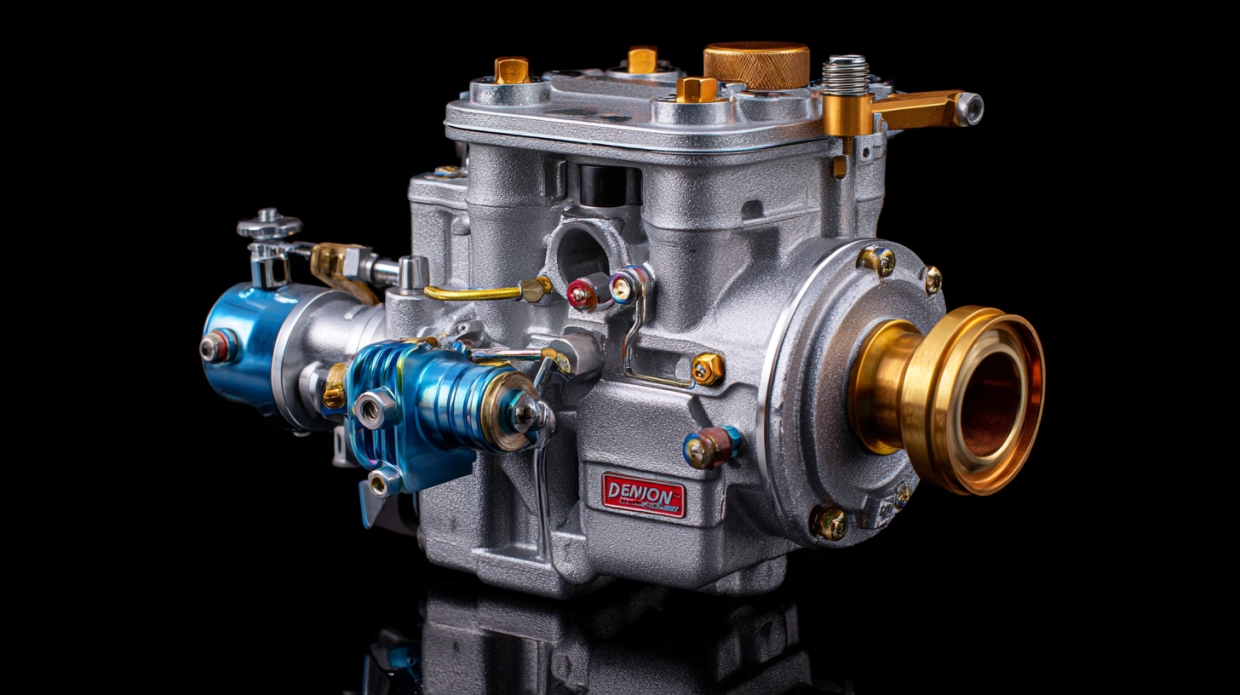
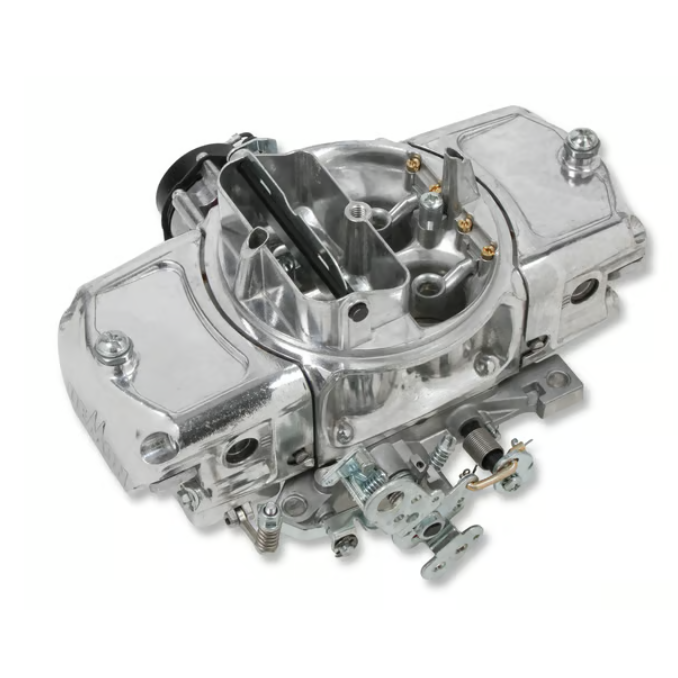
850 CFM Speed Demon Carburetor
- All aluminum polished construction with billet metering blocks and base plate (Now 40% lighter than the original Demons!)
- Fuel bowls and main body have been redesigned for a sleeker, more stylish appearance
- Completely re-engineered and re-calibrated for better drivability and full throttle performance
- Re-designed throttle lever with integrated Ford A/T, 700-R4, and Chrysler kick down options
How This High-Performance Beast Revolutionizes Engine Breathing and Power Delivery
The roar of an engine is more than just noise—it’s the heartbeat of mechanical poetry in motion. For decades, carburetor enthusiasts have chased the perfect balance between raw power and refined control, and few components have captured this essence quite like the Demon Carburetor 850. This isn’t just another fuel delivery system; it’s a masterpiece of engineering that transforms ordinary engines into extraordinary powerhouses.
In the world of high-performance automotive modifications, the carburetor remains the unsung hero of power generation. While fuel injection has dominated modern vehicles, the art of carburetion continues to thrive among enthusiasts who understand that true performance lies in the delicate dance between air and fuel. The Demon Carburetor 850 represents the pinnacle of this ancient art, combining decades of research, development, and real-world testing into a single, revolutionary package.
What is a Demon Carburetor 850?
The Demon Carburetor 850 stands as a testament to American engineering excellence, representing one of the most sophisticated four-barrel carburetors ever produced. At its core, this mechanical marvel is designed to deliver precise fuel metering while maintaining the raw, visceral connection between driver and machine that only a carburetor can provide.
Manufactured by Barry Grant Inc., the Demon Carburetor 850 emerged from decades of racing experience and street performance tuning. This isn’t simply a rebranded version of existing technology—it’s a ground-up design that addresses the shortcomings of traditional carburetors while amplifying their strengths. The “850” designation refers to its CFM (Cubic Feet per Minute) rating, indicating its capacity to flow 850 cubic feet of air-fuel mixture per minute under optimal conditions.
What sets the Demon Carburetor 850 apart from its competitors is its unique approach to fuel atomization and distribution. Unlike conventional carburetors that rely on simple venturi principles, this carburetor incorporates advanced metering systems, precision-machined components, and innovative design features that deliver consistent performance across a wide range of operating conditions.
The carburetor features a distinctive black anodized finish that not only looks aggressive but also provides superior corrosion resistance. The machining quality is immediately apparent, with precision-cut surfaces and perfectly aligned components that speak to the attention to detail invested in every unit. This isn’t mass-produced equipment—each Demon Carburetor 850 represents a commitment to quality that’s becoming increasingly rare in today’s automotive aftermarket.
How Does the Demon Carburetor 850 Work?
Understanding the operation of the Demon Carburetor 850 requires appreciating the fundamental principles of carburetion while recognizing the advanced engineering that elevates this unit above conventional designs. At its heart, the carburetor operates on the venturi principle, where airflow through a narrowed passage creates a vacuum that draws fuel from the float bowl into the airstream.
The Demon Carburetor 850 employs a sophisticated four-barrel design with primary and secondary circuits that activate progressively as engine demand increases. The primary barrels handle idle and light-load conditions, providing smooth, responsive throttle response for everyday driving. As the throttle opens further, the secondary barrels engage, unleashing the carburetor’s full flow potential for maximum power delivery.
What makes this carburetor exceptional is its advanced metering system. Traditional carburetors often struggle with fuel distribution, particularly during transition phases between idle and wide-open throttle. The Demon Carburetor 850 addresses this challenge through precision-calibrated metering rods and jets that maintain optimal air-fuel ratios across the entire operating range.
The accelerator pump system deserves special attention, as it’s one of the most critical components for responsive throttle feel. When you step on the gas, the accelerator pump delivers an immediate shot of fuel to prevent lean stumbling during sudden acceleration. The Demon Carburetor 850 features an adjustable accelerator pump with multiple cam options, allowing tuners to customize the pump shot duration and intensity for specific applications.
The float bowl design incorporates advanced fuel management features, including sight plugs for visual fuel level monitoring and adjustable float settings for precise level control. The bowl venting system is engineered to prevent fuel starvation during hard acceleration or cornering, ensuring consistent fuel delivery even under extreme conditions.
Compatible Vehicles and Engines
The Demon Carburetor 850 shines brightest when matched with appropriate engine combinations. This carburetor is designed for serious performance applications, making it ideal for engines producing between 450 and 650 horsepower. The 850 CFM rating provides optimal airflow for big-block V8 engines, particularly those with displacements ranging from 396 to 502 cubic inches.
Classic muscle cars represent the perfect platform for the Demon Carburetor 850. Chevrolet big-blocks, including the legendary 454, 396, and 502 engines, respond exceptionally well to this carburetor’s flow characteristics. Ford enthusiasts will find similar success with 390, 427, and 460 cubic inch engines, while Mopar fans can unlock the potential of 383, 440, and 426 Hemi powerplants.
Modern crate engines also benefit significantly from the Demon Carburetor 850. Whether you’re building a Pro Street machine, a weekend warrior, or a dedicated track car, this carburetor provides the performance characteristics needed to extract maximum power from contemporary high-performance engines.
The carburetor’s versatility extends beyond traditional V8 applications. Modified six-cylinder engines with forced induction can benefit from the Demon Carburetor 850‘s superior flow capacity and tuning flexibility. However, it’s important to note that this carburetor is specifically designed for performance applications—it’s not recommended for stock or mildly modified engines that don’t require its substantial flow capacity.
Street/strip applications represent the sweet spot for the Demon Carburetor 850. The carburetor’s design philosophy centers around providing maximum performance while maintaining reasonable street manners. This means you can enjoy the benefits of race-level fuel delivery without sacrificing the drivability needed for regular use.
Installation Process and Considerations
Installing a Demon Carburetor 850 requires careful attention to detail and a solid understanding of carburetor fundamentals. The installation process begins with proper preparation of the intake manifold surface, ensuring it’s clean, flat, and free from any debris or old gasket material.
The mounting process starts with selecting the appropriate gasket configuration. The Demon Carburetor 850 typically uses a four-hole square-bore pattern, making it compatible with most performance intake manifolds. However, proper gasket selection is crucial for preventing vacuum leaks and ensuring optimal sealing. A high-quality composite gasket or phenolic spacer can help isolate the carburetor from intake manifold heat, improving fuel stability and reducing the risk of vapor lock.
Fuel line connection requires careful consideration of fuel pressure and flow requirements. The Demon Carburetor 850 operates optimally with fuel pressure between 5 and 7 PSI. Higher pressures can cause flooding and erratic operation, while insufficient pressure leads to fuel starvation under high-demand conditions. A quality fuel pressure regulator is essential for maintaining consistent pressure throughout the RPM range.
The throttle linkage setup demands precision to ensure smooth operation and prevent binding. The carburetor features high-quality throttle shafts and plates that require proper adjustment to prevent air leaks and ensure crisp throttle response. The linkage must provide full throttle opening without over-travel while maintaining smooth, progressive operation throughout the throttle range.
Vacuum connections play a crucial role in carburetor operation. The Demon Carburetor 850 provides multiple vacuum ports for distributor advance, PCV systems, and other vacuum-operated accessories. Proper routing and connection of these lines is essential for optimal engine performance and emissions compliance.
The choke system installation varies depending on the specific model and application. Some versions of the Demon Carburetor 850 come equipped with electric chokes, while others may require manual choke operation. Proper choke setup is critical for cold-weather drivability and engine longevity.
Purchasing and Pricing Information
The Demon Carburetor 850 represents a significant investment in performance, with pricing typically ranging from $800 to $1,200 depending on specific features and configurations. This price point reflects the carburetor’s premium construction, advanced engineering, and race-proven performance capabilities.
Authorized dealers provide the most reliable source for genuine Demon Carburetor 850 units, ensuring proper warranty coverage and technical support. These dealers often offer installation services and tuning assistance, making them valuable partners for enthusiasts seeking maximum performance from their investment.
Online retailers frequently offer competitive pricing on the Demon Carburetor 850, but buyers should exercise caution to ensure they’re purchasing from reputable sources. Counterfeit carburetors have become increasingly common in the aftermarket, making it essential to verify authenticity before making a purchase.
Performance shops specializing in carburetor tuning often stock the Demon Carburetor 850 and can provide valuable insights into application-specific requirements. These professionals can also offer tuning services and performance optimization that maximizes the carburetor’s potential for specific engine combinations.
The investment in a Demon Carburetor 850 should be viewed in the context of overall engine performance. While the initial cost may seem substantial, the carburetor’s contribution to power output, throttle response, and overall driving experience often justifies the expense for serious performance enthusiasts.
CFM Rating and Flow Characteristics
The 850 CFM rating of the Demon Carburetor 850 represents its theoretical maximum airflow capacity under standardized test conditions. However, real-world flow characteristics are far more complex and depend on numerous factors including engine displacement, camshaft specifications, compression ratio, and exhaust system design.
CFM rating alone doesn’t tell the complete story of carburetor performance. The Demon Carburetor 850 excels in how it delivers this airflow, maintaining excellent velocity characteristics that promote proper fuel atomization and distribution. The venturi design creates optimal air speeds that ensure thorough mixing of air and fuel, resulting in more complete combustion and increased power output.
Flow testing reveals that the Demon Carburetor 850 actually flows more than its rated capacity under certain conditions, with peak flows exceeding 900 CFM at higher pressure differentials. This additional flow capacity provides a safety margin that prevents the carburetor from becoming a restriction as engine output increases.
The progressive nature of the four-barrel design means that flow increases gradually as throttle opening increases. The primary barrels provide excellent low-speed characteristics with flows around 350-400 CFM, while the secondary barrels contribute the remaining capacity for high-demand situations. This progressive flow characteristic is crucial for maintaining good drivability while providing maximum power potential.
Understanding proper CFM matching is essential for optimal performance. The general rule suggests approximately 1.5-1.8 CFM per cubic inch of engine displacement for naturally aspirated applications. The Demon Carburetor 850 is therefore ideally suited for engines in the 470-570 cubic inch range, though this can vary based on other engine specifications.
Demon 850 vs. Holley 850: The Ultimate Comparison
The comparison between the Demon Carburetor 850 and the Holley 850 represents one of the most debated topics in performance carburetor circles. Both carburetors share similar CFM ratings and applications, but their approaches to achieving peak performance differ significantly.
Build quality immediately distinguishes the Demon Carburetor 850 from its Holley counterpart. The Demon features superior machining tolerances, premium materials, and more precise component alignment. The throttle shafts operate more smoothly, the float bowl construction is more robust, and the overall fit and finish exceeds that of comparable Holley units.
Fuel metering represents another area where the Demon Carburetor 850 demonstrates its superiority. The metering system provides more precise fuel control across all operating ranges, resulting in better fuel economy during light-load conditions and more consistent power delivery under high-demand situations. The transition from primary to secondary operation is notably smoother with the Demon carburetor.
The accelerator pump system in the Demon Carburetor 850 offers more tuning flexibility than the Holley equivalent. Multiple cam profiles and adjustable pump shot volumes allow tuners to optimize throttle response for specific applications. This adjustability is particularly valuable for engines with aggressive camshaft profiles or forced induction systems.
Durability testing reveals significant differences between the two carburetors. The Demon Carburetor 850 consistently demonstrates superior longevity, with components showing less wear after extended high-performance use. The throttle shaft bushings, in particular, maintain tighter tolerances longer, preventing the vacuum leaks that commonly plague aging Holley carburetors.
Price comparison initially favors the Holley 850, but long-term cost analysis often tips toward the Demon Carburetor 850. The superior build quality and durability reduce maintenance requirements and extend service life, ultimately providing better value for serious performance applications.
Performance Benefits and Power Gains
The performance benefits of the Demon Carburetor 850 extend far beyond simple horsepower increases, though power gains are certainly significant. Properly tuned installations typically see power increases of 15-30 horsepower compared to stock or entry-level carburetors, with gains most pronounced in the mid-range and high-RPM operating ranges.
Throttle response represents one of the most immediately noticeable improvements with the Demon Carburetor 850. The precise accelerator pump system and advanced metering circuits eliminate the hesitation and stumbling common with lesser carburetors. This crisp throttle response translates to improved quarter-mile times and more engaging street driving experience.
Fuel distribution improvements contribute significantly to overall engine performance. The Demon Carburetor 850‘s superior atomization characteristics ensure more complete combustion, resulting in increased power output and improved fuel efficiency. Engine builders report more consistent cylinder-to-cylinder fuel distribution, leading to smoother operation and reduced emissions.
High-RPM performance showcases the Demon Carburetor 850‘s advanced engineering. While many carburetors suffer from fuel starvation or poor metering at high engine speeds, the Demon maintains consistent fuel delivery well beyond 6,500 RPM. This high-RPM capability makes it ideal for racing applications and high-performance street engines.
The carburetor’s cold-start and warm-up characteristics represent another significant improvement over conventional designs. The choke system and enrichment circuits provide reliable cold operation without the flooding issues common with other high-performance carburetors. This reliability is particularly valuable for street-driven vehicles that must operate in various weather conditions.
Racing vs. Street Applications
The Demon Carburetor 850 excels in both racing and street applications, though its characteristics lean heavily toward performance-oriented use. The carburetor’s design philosophy centers on maximizing power output while maintaining reasonable street manners, making it an excellent choice for dual-purpose vehicles.
Racing applications benefit from the Demon Carburetor 850‘s consistent high-RPM fuel delivery and precise metering characteristics. Drag racing, in particular, showcases the carburetor’s strengths, with the accelerator pump system providing instant throttle response off the line and the high-flow capability supporting maximum power output throughout the run. Road racing applications appreciate the carburetor’s stability under high cornering loads and its resistance to fuel starvation during extended high-speed operation.
Street performance represents the Demon Carburetor 850‘s most versatile application. The progressive four-barrel design provides excellent drivability for daily use while delivering race-level performance when demanded. The carburetor maintains smooth idle characteristics, provides good fuel economy during cruise conditions, and unleashes its full potential when the throttle opens.
The key to successful street application lies in proper tuning and component matching. The Demon Carburetor 850 requires an engine capable of utilizing its flow capacity—installing it on a mildly modified engine will result in poor low-speed drivability and reduced performance. However, when properly matched to appropriate engine combinations, it provides an ideal balance of street manners and performance capability.
Weekend warrior applications represent perhaps the perfect use case for the Demon Carburetor 850. These vehicles see regular street use but also participate in occasional track events or drag strip sessions. The carburetor’s versatility allows it to excel in both environments without requiring constant re-tuning or component changes.
Tuning for Peak Performance
Achieving peak performance from the Demon Carburetor 850 requires a systematic approach to tuning that considers all aspects of carburetor operation. The process begins with establishing proper baseline settings and progresses through methodical adjustments to optimize each circuit for specific engine requirements.
Initial setup focuses on float level adjustment, which affects fuel delivery throughout the operating range. The Demon Carburetor 850 features adjustable floats that allow precise fuel level control. Proper float setting prevents flooding during acceleration and ensures adequate fuel supply during high-demand conditions. The carburetor’s sight plugs make float level verification straightforward and accurate.
Idle circuit tuning establishes the foundation for all other adjustments. The Demon Carburetor 850‘s idle mixture screws require careful adjustment to achieve smooth idle quality while maintaining optimal air-fuel ratios. The process involves setting initial screw positions, adjusting idle speed, and fine-tuning mixture screws for maximum vacuum and smoothest operation.
Main jet selection represents the most critical aspect of Demon Carburetor 850 tuning. The carburetor’s removable main jets allow easy experimentation with different sizes to optimize wide-open-throttle performance. Proper jet selection requires consideration of engine displacement, compression ratio, camshaft specifications, and intended use. Too small jets cause lean conditions and reduced power, while oversized jets waste fuel and may cause rich-running conditions.
Accelerator pump tuning addresses throttle response and eliminates hesitation during acceleration. The Demon Carburetor 850 offers multiple accelerator pump cam profiles and adjustable pump shot volume. Proper cam selection depends on engine characteristics and intended use, with more aggressive cams providing quicker response for racing applications and milder cams offering better street manners.
Power valve selection affects part-throttle fuel delivery and overall drivability. The Demon Carburetor 850 uses a standard Holley-style power valve system that can be tuned for specific engine vacuum characteristics. Proper power valve selection prevents lean conditions during moderate acceleration while avoiding excessive fuel enrichment during cruise conditions.
Key Features and Engineering Innovations
The Demon Carburetor 850 incorporates numerous advanced features that distinguish it from conventional carburetors. The precision-machined throttle body represents a significant advancement in carburetor construction, with CNC-machined surfaces ensuring perfect alignment and minimal air leakage. The throttle plates are precisely sized and balanced to provide smooth, progressive airflow control throughout the throttle range.
Advanced fuel bowl design incorporates multiple innovations that improve fuel delivery and stability. The sight plugs allow visual monitoring of fuel level without carburetor disassembly, while the advanced venting system prevents fuel starvation during hard acceleration or cornering. The fuel inlet design accommodates high-flow fuel systems and includes provisions for fuel pressure regulation.
The metering block construction represents another area of innovation in the Demon Carburetor 850. Unlike cast metering blocks used in conventional carburetors, the Demon features machined aluminum blocks with precisely drilled passages and threaded jet installations. This construction improves flow characteristics and allows for more accurate fuel metering throughout the operating range.
Accelerator pump innovations include multiple cam profiles and adjustable pump shot duration. This flexibility allows tuners to optimize throttle response for specific applications, whether focusing on street drivability or maximum racing performance. The pump system’s durability exceeds that of conventional designs, maintaining consistent operation even under severe racing conditions.
The choke system, when equipped, incorporates advanced heating elements and progressive opening characteristics that provide reliable cold-weather operation. The electric choke system automatically adjusts for temperature conditions, eliminating the guesswork associated with manual choke operation while providing optimal cold-start performance.
Horsepower Improvements and Dyno Results
Real-world dyno testing consistently demonstrates the Demon Carburetor 850‘s ability to extract additional power from performance engines. Typical installations show power gains ranging from 15 to 35 horsepower compared to stock or entry-level carburetors, with the most significant improvements occurring in the mid-range and high-RPM power bands.
Peak horsepower gains represent only part of the performance story. The Demon Carburetor 850 typically produces broader, more usable power curves that translate to improved acceleration and overall performance. Torque curves show particular improvement in the 3,000-5,500 RPM range, where most street driving occurs. This mid-range improvement makes the power gains more noticeable during everyday driving.
Engine combinations producing 450-650 horsepower show the most dramatic improvements with the Demon Carburetor 850. These engines possess sufficient airflow demands to utilize the carburetor’s flow capacity while benefiting from its superior metering characteristics. Smaller engines may not fully utilize the carburetor’s potential, while larger engines might require even more flow capacity.
Air-fuel ratio improvements contribute significantly to the power gains achieved with the Demon Carburetor 850. The carburetor’s precise metering maintains optimal ratios throughout the operating range, preventing the rich or lean conditions that rob power from lesser carburetors. Wideband oxygen sensor monitoring reveals more consistent air-fuel ratios, particularly during transition periods between idle and wide-open throttle.
Specific engine combinations have produced particularly impressive results with the Demon Carburetor 850. Big-block Chevrolet engines, especially 454 and 502 cubic inch variants, consistently show substantial power gains. Ford 460 engines also respond well to the carburetor’s flow characteristics, while Mopar big-blocks demonstrate excellent power improvements throughout the RPM range.
User Reviews and Real-World Experiences
Enthusiast reviews of the Demon Carburetor 850 consistently praise its build quality, performance characteristics, and tuning flexibility. Users frequently comment on the carburetor’s superior machining quality and attention to detail compared to other manufacturers. The smooth operation of throttle components and the precise feel of adjustment mechanisms receive particular praise from experienced tuners.
Street performance reviews highlight the Demon Carburetor 850‘s excellent drivability characteristics. Users report smooth idle quality, crisp throttle response, and good fuel economy during cruise conditions. The carburetor’s ability to provide race-level performance when demanded while maintaining reasonable street manners impresses most reviewers. Cold-start performance receives consistently positive comments, with users noting reliable operation in various weather conditions.
Racing applications generate overwhelmingly positive feedback from Demon Carburetor 850 users. Drag racers appreciate the carburetor’s consistent performance run after run, with minimal variation in air-fuel ratios or power output. The accelerator pump system’s responsiveness off the starting line and the carburetor’s high-RPM stability receive particular praise from quarter-mile competitors.
Installation experiences vary depending on user skill levels and application requirements. Experienced mechanics and engine builders report straightforward installation and setup procedures, while novice users sometimes struggle with initial tuning requirements. The carburetor’s comprehensive documentation and available technical support help address most installation challenges.
Long-term durability reports remain consistently positive for the Demon Carburetor 850. Users with several years of experience report minimal maintenance requirements and excellent component longevity. The throttle shaft bushings, in particular, maintain tight tolerances longer than comparable carburetors, preventing the vacuum leaks that commonly develop with age.
Air-Fuel Mixture Adjustment Procedures
Proper air-fuel mixture adjustment represents the most critical aspect of Demon Carburetor 850 tuning and requires systematic attention to each circuit within the carburetor. The process begins with idle mixture adjustment, which affects not only idle quality but also off-idle response and transition characteristics.
Idle mixture screw adjustment follows a specific procedure for optimal results. Starting with the screws seated lightly, back them out approximately 1.5 turns as a baseline setting. With the engine at normal operating temperature and proper idle speed, adjust each screw individually for highest vacuum reading or smoothest idle quality. The final setting typically falls between 1 and 2.5 turns out from seated position.
Main jet adjustment affects wide-open-throttle air-fuel ratios and peak power output. The Demon Carburetor 850‘s removable main jets allow easy experimentation with different sizes. Proper jet selection requires consideration of engine specifications, altitude, and intended use. Too small jets cause lean conditions and potential engine damage, while oversized jets waste fuel and may cause rich-running conditions that reduce power.
Power valve selection influences part-throttle fuel delivery and overall drivability. The power valve opens when manifold vacuum drops below its rated value, enriching the mixture for acceleration and high-load conditions. Proper power valve selection typically requires choosing a valve rated 1.5-2.0 inches of mercury below normal cruise vacuum levels.
Secondary mixture adjustment affects high-RPM performance and overall power output. The Demon Carburetor 850‘s secondary metering system requires careful tuning to optimize air-fuel ratios during wide-open-throttle operation. This adjustment typically involves main jet selection and may include metering rod adjustments depending on specific carburetor configuration.
Common Issues and Troubleshooting
While the Demon Carburetor 850 represents a high-quality carburetor design, certain issues can arise during installation and operation. Understanding these potential problems and their solutions helps ensure optimal performance and longevity from the carburetor.
Fuel leakage represents one of the most common issues encountered with any carburetor, including the Demon Carburetor 850. External leaks typically result from damaged gaskets, loose fittings, or incorrect float adjustments. Internal leaks often manifest as flooding conditions or rich-running symptoms and usually require float adjustment or needle and seat replacement.
Hard starting or poor cold-weather operation often indicates choke system problems or incorrect idle circuit adjustment. The Demon Carburetor 850‘s choke system requires proper adjustment and adequate power supply for electric choke models. Manual choke versions require proper cable adjustment and user familiarity with choke operation procedures.
Hesitation or stumbling during acceleration typically results from accelerator pump problems or incorrect air-fuel mixture adjustments. The accelerator pump system must deliver the correct volume of fuel at the proper rate to prevent lean conditions during throttle transitions. Pump diaphragm damage or incorrect cam selection can cause these symptoms.
High-speed fuel starvation may occur in extreme performance applications or with inadequate fuel system capacity. The Demon Carburetor 850 requires adequate fuel pressure and flow to maintain performance at high RPM levels. Fuel system upgrades may be necessary for maximum performance applications.
Vacuum leaks can cause numerous drivability issues and are often difficult to diagnose. Common leak sources include throttle shaft bushings, base gaskets, and vacuum line connections. Systematic leak detection using carburetor cleaner or propane can help identify problem areas.
Cleaning and Maintenance Procedures
Proper maintenance ensures optimal performance and longevity from the Demon Carburetor 850. Regular cleaning and inspection prevent many common problems and help maintain consistent performance over extended periods of use.
Routine maintenance begins with external cleaning and inspection. Regular removal of dirt, oil, and other contaminants prevents these materials from entering the carburetor and causing internal damage. The carburetor’s anodized finish requires gentle cleaning with appropriate solvents to prevent surface damage.
Internal cleaning requires carburetor disassembly and thorough cleaning of all components. The Demon Carburetor 850‘s precision construction demands careful handling during disassembly to prevent damage to machined surfaces. Specialized carburetor cleaning solvents dissolve fuel residues and varnish deposits that can affect performance.
Float bowl maintenance includes regular inspection of fuel levels and cleaning of sediment that may accumulate over time. The sight plugs on the Demon Carburetor 850 allow easy fuel level monitoring without disassembly. Fuel filter replacement prevents contaminants from entering the carburetor and causing internal damage.
Accelerator pump system maintenance involves periodic replacement of pump diaphragms and inspection of pump valves. The pump system’s exposure to fuel and constant flexing during operation makes it one of the most wear-prone components in the carburetor. Regular maintenance prevents pump failure and maintains optimal throttle response.
Gasket and seal replacement should be performed during major maintenance intervals or whenever leaks develop. The Demon Carburetor 850 uses high-quality gaskets and seals, but these components eventually degrade and require replacement to maintain proper sealing and performance.
Warranty Coverage and Support
The Demon Carburetor 850 comes with comprehensive warranty coverage that reflects the manufacturer’s confidence in build quality and reliability. Standard warranty coverage typically extends for one year from date of purchase and covers manufacturing defects and component failures under normal use conditions.
Warranty coverage includes replacement or repair of defective components, though specific terms vary depending on the nature of the problem and application conditions. Racing applications may have modified warranty terms due to the extreme operating conditions encountered in competitive environments. Documentation of proper installation and maintenance may be required for warranty claims.
Technical support availability represents a significant advantage of choosing the Demon Carburetor 850. Knowledgeable technical staff can provide tuning guidance, troubleshooting assistance, and application-specific recommendations. This support proves invaluable for both experienced mechanics and novice enthusiasts seeking to maximize their carburetor’s performance.
Authorized dealer networks provide additional support resources, including installation services and performance tuning. These dealers often have extensive experience with the Demon Carburetor 850 and can provide valuable insights into application-specific requirements and optimization techniques.
Replacement parts availability ensures long-term serviceability of the Demon Carburetor 850. Critical wear components such as gaskets, pump diaphragms, and needle and seat assemblies remain readily available through authorized dealers and distributors. This parts availability supports the carburetor’s long-term viability as a performance solution.
Marine Applications and Modifications
While primarily designed for automotive applications, the Demon Carburetor 850 can be adapted for marine use with appropriate modifications and considerations. Marine environments present unique challenges including corrosive salt air, varying fuel quality, and different operating characteristics compared to automotive use.
Corrosion resistance becomes a primary concern for marine applications of the Demon Carburetor 850. The carburetor’s anodized finish provides some protection against corrosion, but additional protective measures may be necessary for saltwater environments. Regular cleaning and inspection become even more critical in marine applications to prevent corrosion damage.
Fuel system modifications are often necessary for marine installations of the Demon Carburetor 850. Marine fuel systems must meet Coast Guard regulations and safety requirements that may differ from automotive standards. Fuel line routing, ventilation requirements, and safety shutoffs require careful consideration during installation.
Engine application considerations include different operating characteristics of marine engines compared to automotive installations. Marine engines often operate at more consistent RPM levels and may have different cooling and exhaust system requirements that affect carburetor tuning. The Demon Carburetor 850‘s tuning flexibility allows adaptation to these different operating conditions.
Regulatory compliance represents an important consideration for marine applications of the Demon Carburetor 850. Coast Guard regulations and state laws may impose specific requirements on marine fuel systems and emissions equipment. Consultation with marine installation specialists ensures compliance with applicable regulations.
Upgrades and Replacement Parts
The Demon Carburetor 850 benefits from an extensive selection of upgrade components and replacement parts that allow customization for specific applications. These upgrades can enhance performance, improve reliability, or adapt the carburetor for specialized uses.
Performance upgrades include high-flow air horns, racing-specific metering blocks, and specialized accelerator pump systems. These components can increase airflow capacity, improve fuel distribution, or enhance throttle response for specific applications. However, upgrades should be selected carefully to ensure compatibility with overall engine requirements.
Tuning components represent the most common upgrade category for the Demon Carburetor 850. Various main jet sizes, metering rods, power valves, and accelerator pump components allow precise tuning for specific engine combinations. This component availability makes the carburetor highly adaptable to different performance requirements.
Replacement parts ensure long-term serviceability and maintain optimal performance over extended use periods. Critical wear components such as throttle shaft bushings, pump diaphragms, and needle and seat assemblies require periodic replacement to maintain performance and prevent problems.
Specialty applications may require unique components or modifications not available as standard options. Custom machine work, specialized metering components, or application-specific modifications can adapt the Demon Carburetor 850 for unusual installations or extreme performance requirements.
Conclusion: The Ultimate Performance Investment
The Demon Carburetor 850 represents more than just a fuel delivery system—it embodies the pinnacle of carburetor engineering and performance technology. For enthusiasts seeking to extract maximum performance from their engines while maintaining the visceral connection that only a carburetor can provide, few options match the Demon’s combination of quality, performance, and tuning flexibility.
The investment in a Demon Carburetor 850 pays dividends in multiple ways. The immediate performance improvements in horsepower, throttle response, and overall engine characteristics provide tangible benefits that enhance the driving experience. The long-term reliability and build quality ensure that this investment continues delivering results for years of enthusiastic use.
Whether your passion lies in weekend cruising, quarter-mile competition, or serious street performance, the Demon Carburetor 850 provides the foundation for achieving your performance goals. Its sophisticated engineering bridges the gap between race-proven performance and street-friendly drivability, making it the ideal choice for enthusiasts who refuse to compromise on either attribute.
The carburetor’s extensive tuning capabilities and upgrade potential ensure that it can evolve with your performance requirements. As engine modifications progress or performance goals change, the Demon Carburetor 850 can be adapted and optimized to meet new challenges and deliver consistently exceptional results.
In an era dominated by electronic fuel injection, the Demon Carburetor 850 stands as a testament to the enduring appeal of mechanical fuel metering. For those who understand that true performance involves more than just numbers on a dyno sheet, this carburetor delivers the soul and character that makes driving a truly engaging experience.